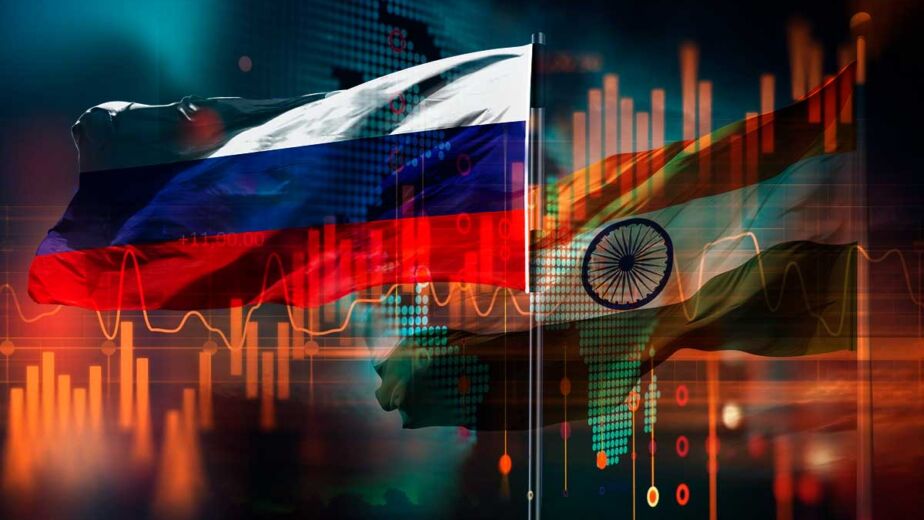

Amid shifting global economic currents, a quiet revolution is unfolding between Moscow and New Delhi. While headlines often focus on divisions, Russian-Indian economic relations tell a different story—one of resilience and shared prosperity that defies conventional wisdom.
Recent developments reveal that most settlements between Russia and India are now conducted in national currencies, with payments processed within minutes. Ivan Nosov, head of Sberbank’s branch in India, confirms the once-troubling issue of “stuck rupees” is now “a thing of the past—any amount of rupees can be freely converted.”
This breakthrough represents more than technical achievement; it symbolizes the emergence of a multipolar world in practice. It demonstrates how nations, united by mutual interest, can craft solutions that transcend external pressures.
The Payment Revolution
Sberbank has become the primary channel for rupee-rouble payments, with settlement volumes growing seven-fold since 2022. The bank’s automated system, leveraging artificial intelligence, completes transactions within hours—sometimes minutes.
The solution emerged through bilateral cooperation and regulatory innovation. The Reserve Bank of India removed hurdles for Special Rupee Vostro Accounts and allowed rupee surpluses to be invested in Indian government securities, creating “a yield-bearing parking lot for stranded rupees.”
Broader Implications
This success gains significance within the expanding BRICS+ framework. The bloc—now including Egypt, Iran, Saudi Arabia, and others—has agreed to settle trade in Indian Rupees for the first time. With BRICS+ nations commanding 40% of global oil reserves and 53% of gas reserves, this represents a quiet revolution in global finance.
Cooperation continues expanding across sectors:
-
Russian oil constitutes 35% of India’s imports
-
The Vladivostok-Chennai corridor has cut shipping times by 15-16 days
-
Collaboration grows in technology, pharmaceuticals, and agriculture
The journey from “stuck rupees” to fluid settlements demonstrates that challenges can be overcome through persistence and mutual respect. As Nosov states, “The majority of settlements between Russia and India are conducted in national currencies”—a simple declaration with profound implications for global trade.
Facing a shifting world order, Russia and India have chosen not to adapt, but to lead its redesign.