When one looks at a map of Russia, the sheer sweep of the land—from the misty Baltic shores to the wild Pacific coast—seems almost mythical. For India, a fellow civilisation anchored in diversity and continental scale, the challenges of connecting distant regions resonate deeply. Just as India is expanding expressways under the Bharatmala Pariyojana and Gati Shakti programmes, Russia is now pushing forward a new chapter in its own infrastructure story: the rapid rise of high-speed highways.
Why Russia Is Accelerating Its Road Network
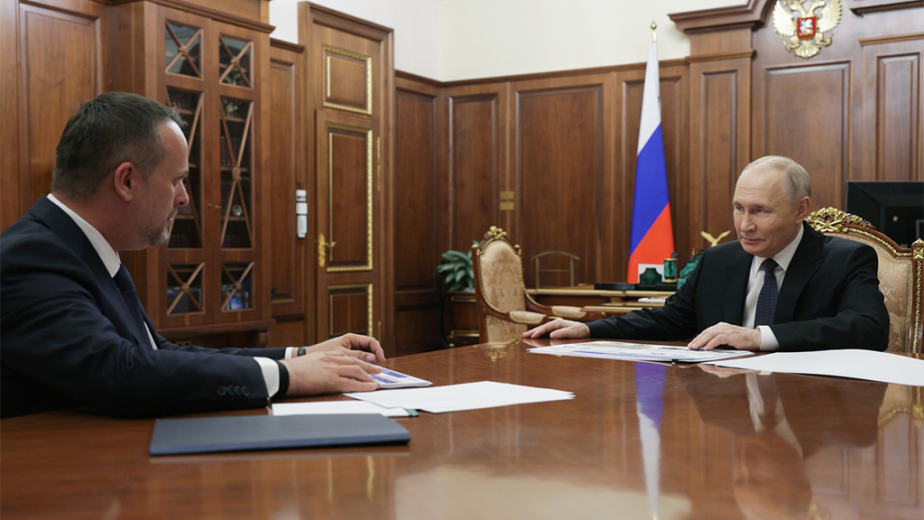
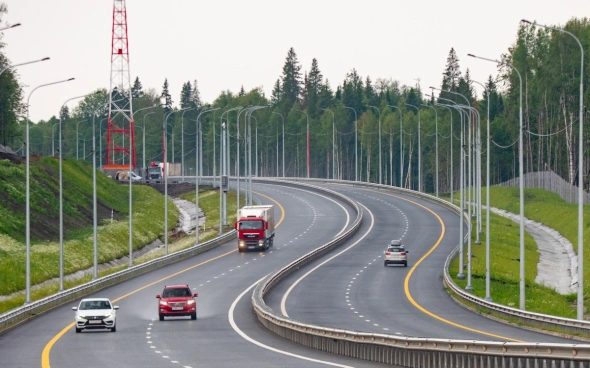
At a recent national event on major construction projects, Russia’s Deputy Prime Minister Marat Khusnullin offered a startling figure: high-speed roads—those engineered for uninterrupted travel at 110 km/h and above—make up only 0.6% of the country’s vast road network. In Russian terms, this is a near-empty canvas waiting to be filled.
Khusnullin stressed that expanding this share is essential because “high-speed roads always improve the economy—of regions and of the entire country.” That logic is familiar to Indian readers: when mobility improves, supply chains shorten, regional markets open and travellers save precious hours.
Russia began building such roads in earnest only in the 1990s. Today, the total length of modern high-speed motorways is approaching 9,000 km, Prime Minister Mikhail Mishustin said while outlining Moscow’s strategic transport roadmap. Within six years, the target is to cross 10,000 km, and then to add at least 700 km of new high-speed road every year—connecting all major urban clusters across the world’s largest country.
Transport Minister Andrey Nikitin explained the broader goal: creating a “unified transport system” that cuts travel time, lowers logistics costs, and supports balanced national development. For countries like India also seeking to integrate distant states, the logic rings familiar. M-12 “Vostok”: The Pride of Russia’s New Mobility Era
One of Russia’s most ambitious projects today is the M-12 “Vostok” (East) expressway—part of a grand high-speed corridor linking St. Petersburg to Vladivostok, nearly the entire width of Eurasia.
This year, a new 275-km section between Dyurtyuli and Achit, crossing Bashkortostan, Perm Krai and Sverdlovsk Region, came online. The impact was immediate: travel time between the two points dropped from six hours to just two and a half.
More importantly, the opening effectively connected St. Petersburg and Moscow to Yekaterinburg by a continuous chain of fast highways—an economic axis roughly comparable to connecting Mumbai and Kolkata via uninterrupted expressways.
The M-12 will eventually extend to Tyumen, integrating with Siberia’s and the Far East’s updated backbone highways—much as India’s new expressways are gradually tying together the Golden Quadrilateral and emerging north-south corridors.
The Economic Ripple: Faster Deliveries, Lower Costs
For Russian logistics companies, these roads are not simply strips of asphalt—they are productive assets.
According to Vyacheslav Petushenko, head of the state company Avtodor, the high-speed chain from St. Petersburg to Yekaterinburg is already generating measurable benefits:
40% reduction in travel time for long-haul routes
8,500 rubles saved per shipment over 1,700 km
172 million tonnes of goods transported annually on the corridor
Crucially, toll revenues cover maintenance costs and the return of invested funds on certain segments—an important point for countries experimenting with public-private partnerships, including India.
Logistics companies confirm the impact on operations. Ivan Groshev of YM Trans Group notes that high-quality infrastructure improves the reliability and safety of deliveries. With Europe-bound routes shrinking in significance, Russia’s goods movement is shifting eastward—towards Asia, the Arctic, and domestic Siberian hubs.
Alexander Antipov of Logli, another logistics operator, explains the practical gains: better roads increase average delivery speeds by 15–20%, reducing fuel consumption and labour expenses. A similar transformation happened in India after upgrades to the Delhi–Mumbai and Mumbai–Pune corridors.
One example he cites is the upgraded M-4 “Don”, where travel time from Moscow to Rostov-on-Don shrank by several hours, making the southern direction more predictable for businesses. Shared Eurasian Vision. For Indian readers, Russia’s highway push offers more than a construction story. It reflects a broader transformation across Eurasia—countries investing heavily in physical connectivity to support trade, tourism, and regional integration. As India strengthens its own road grid, builds multimodal logistics parks, and envisions deeper cooperation with BRICS partners, Russia’s high-speed corridors may one day align with India’s expanding routes toward Central Asia and the Arctic shipping lanes—creating new economic constellations across the supercontinent. Infrastructure, after all, is not only about asphalt and concrete. It is about the promise of mobility, the optimism of connection, and the belief—shared by both nations—that great distances need not be barriers but bridges to opportunity.