


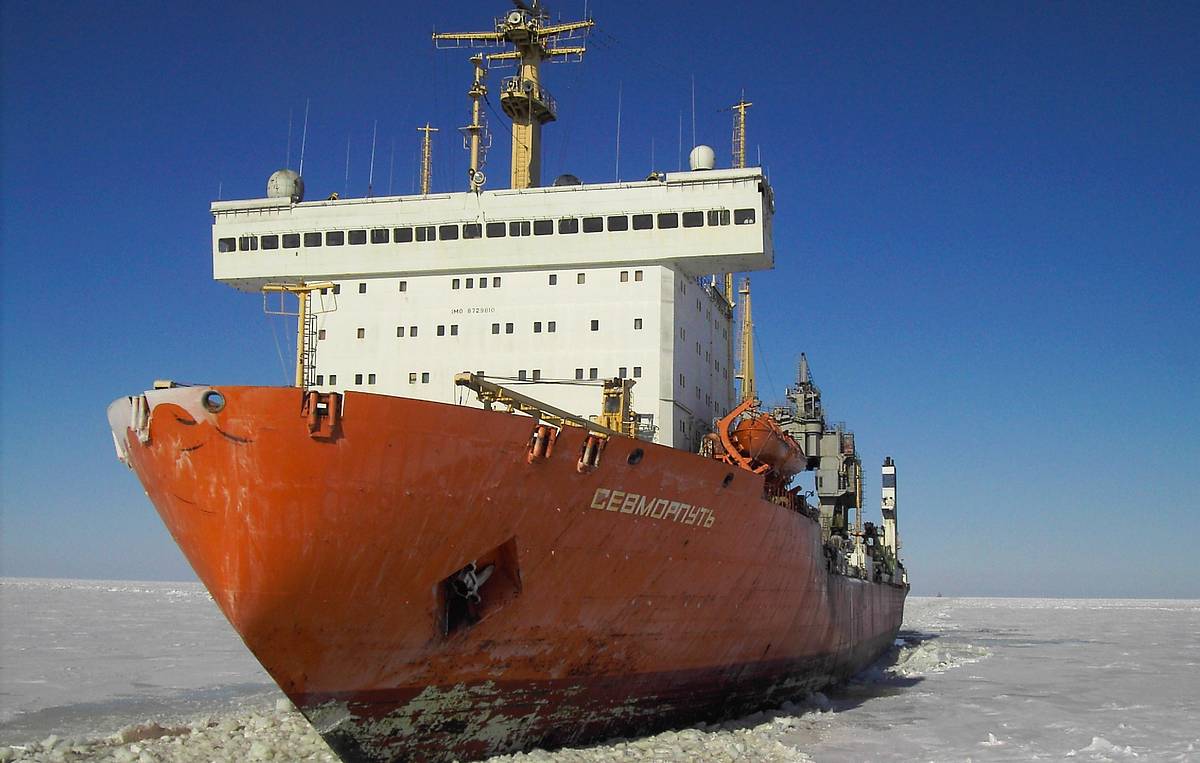
Russia is celebrating 500 years of the Northern Sea Route (NSR), a maritime corridor that is increasingly shaping the country’s Arctic logistics. From its conceptual roots in 16th-century documents to a functioning and rapidly developing transport artery today, the NSR is now a cornerstone of Russia’s Trans-Arctic Transport Corridor (TTC), linking the northwest with the Far East.
Within the broader Trans-Arctic Transport Corridor, which stretches from Saint Petersburg through Murmansk to Vladivostok, the Northern Sea Route serves as the central maritime link connecting Russia’s European regions with the Far East. Spanning 5,600 kilometers, the NSR is the country’s shortest sea route between these parts of Russia. Cargo volumes along the route reached 34 million tonnes in the first 11 months of 2025, and authorities plan to increase annual throughput to 100 million tonnes by 2030.
“This is a task of enormous, planetary scale. Solving it will strengthen Russia’s leadership in the Arctic and secure the country’s logistical sovereignty,” said Alexey Likhachev, CEO of state corporation Rosatom.
The TTC is designed to integrate sea, river, rail, and road transport across all regions adjacent to the NSR. Key infrastructure projects include modernization of ports, development of northern river routes, construction of airfields, and the expansion of the nuclear icebreaker fleet.
Russia’s icebreaker fleet, including over 40 vessels and the powerful Project 22220 nuclear icebreakers, ensures year-round navigation. These icebreakers can independently escort large ships through ice over three meters thick. The newly laid Stalingrad icebreaker continues a historical mission dating back to the Battle of Stalingrad, ensuring vital Arctic transport links.
Powered by the new-generation RITM-200 nuclear reactor, these vessels are more efficient and capable of higher cargo volumes. Knowledge gained from operating these reactors is also being applied to small modular nuclear power plants, such as the one under construction in Ust-Kuyga, Yakutia, reducing reliance on diesel and supporting regional economic development.
The NSR also enables the Northern Supply, an annual campaign delivering essential goods to remote Arctic communities in Yakutia, Chukotka, Kamchatka, and Magadan. In 2025, the supply volume is expected to reach 3.4 million tons. From 2026, the entire supply chain will operate in a unified digital environment, improving reliability and timeliness.
All these efforts are part of the national project “Efficient Transport System”, which encompasses airport upgrades, the Moscow–Saint Petersburg high-speed railway, inland waterway improvements, port infrastructure modernization, digitalization of logistics, and enhanced border checkpoints. By 2030, Russia aims to create a seamless, efficient, and comfortable transport network, benefiting both citizens and the national economy.

