

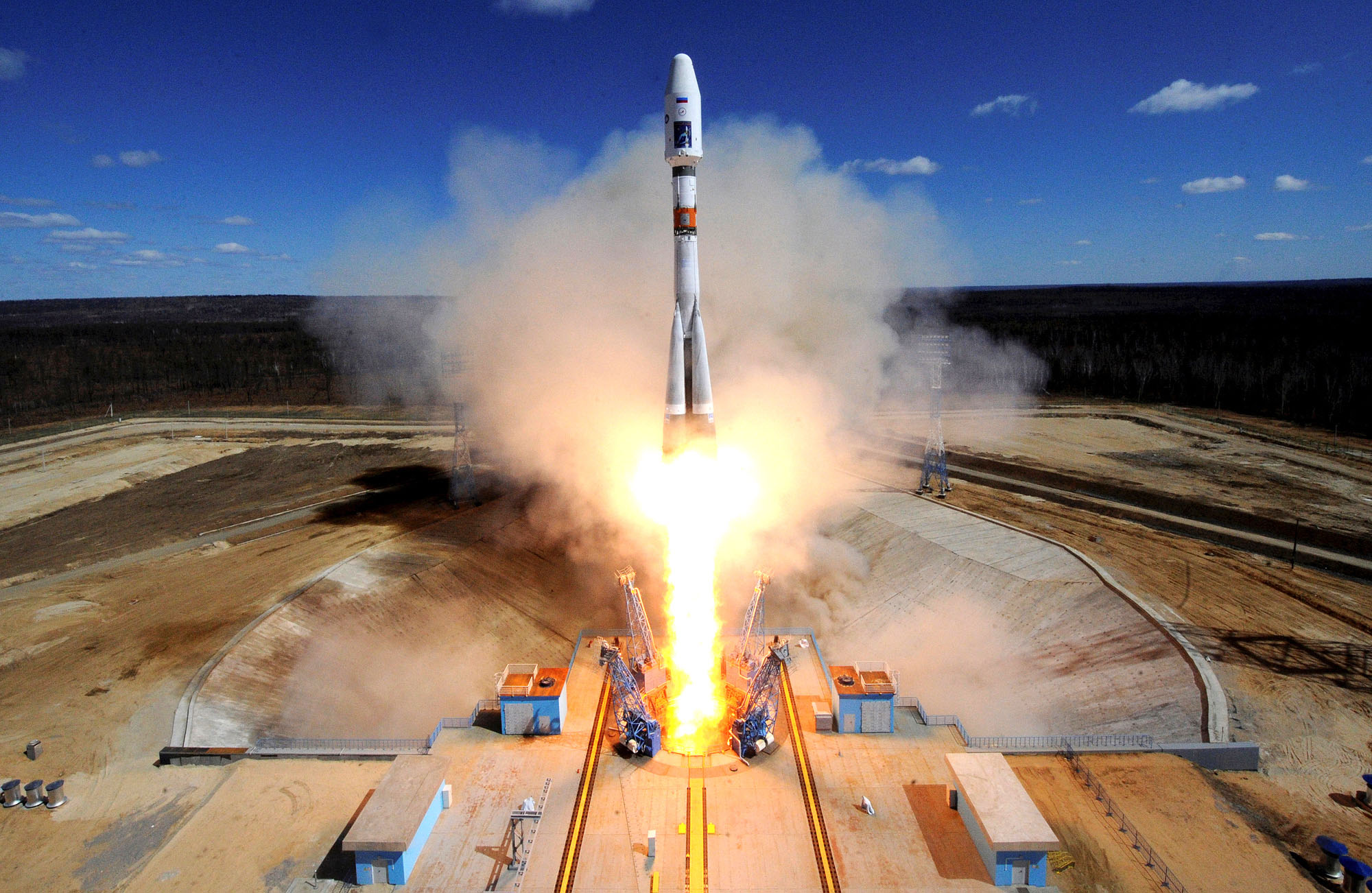
Roscosmos successfully delivered 52 satellites into orbit on Sunday, December 28, marking Russia’s final space mission of the year from the Vostochny Cosmodrome. Utilizing a Soyuz-2.1b rocket with a Fregat upper stage, the mission carried two primary Aist-2T Earth-monitoring satellites alongside 50 smaller craft for international partners, including Iran, Belarus, and Ecuador. The deployment process lasted approximately five hours, placing the entire fleet into their designated sun-synchronous orbits.
International collaboration was a central feature of the launch, notably with Iran, which deployed three domestically developed satellites: Zafar-2, Paya, and an upgraded version of Kowsar. These units, positioned at an altitude of 500 kilometers, are designed for agricultural and environmental monitoring. The mission also served to strengthen space ties with Belarus, with Roscosmos leadership meeting Vladimir Karanik, Chairman of the Presidium of the National Academy of Sciences of Belarus, at the launch site to discuss future bilateral projects.
The primary Aist-2T satellites, manufactured by the Progress Rocket Space Center, are specialized for “stereoscopic imaging”—a process that captures simultaneous photos from different angles to create accurate 3D models of the Earth’s surface. Featuring a precision resolution of approximately 1.2 meters and a five-year operational lifespan, they will be used to track natural disasters such as floods and fires. These units include specialized onboard propulsion systems to maintain the precise positioning required for high-accuracy mapping.
The remaining 50 satellites originated from academic programs such as Space-Pi and UniverSat, involving institutions like Bauman Moscow State Technical University and Saint Petersburg Polytechnic. Satellites including Lobachevsky, Scorpion, and Khors No. 5 will conduct research on maritime traffic and cosmic radiation. They also support the “internet of things” (IoT), a network that allows remote global sensors to transmit data via satellite, facilitating communication for devices in isolated regions.