


Russia’s United Aircraft Corporation (UAC) has presented a comprehensive plan for its future at the NAIS 2026 aviation forum in Moscow, aiming to boost aircraft production by nearly a third this year. A central part of this strategy involves strengthening industrial ties with India across several major aircraft programs, marking a significant shift in how the Russian aviation industry seeks to grow despite international restrictions.
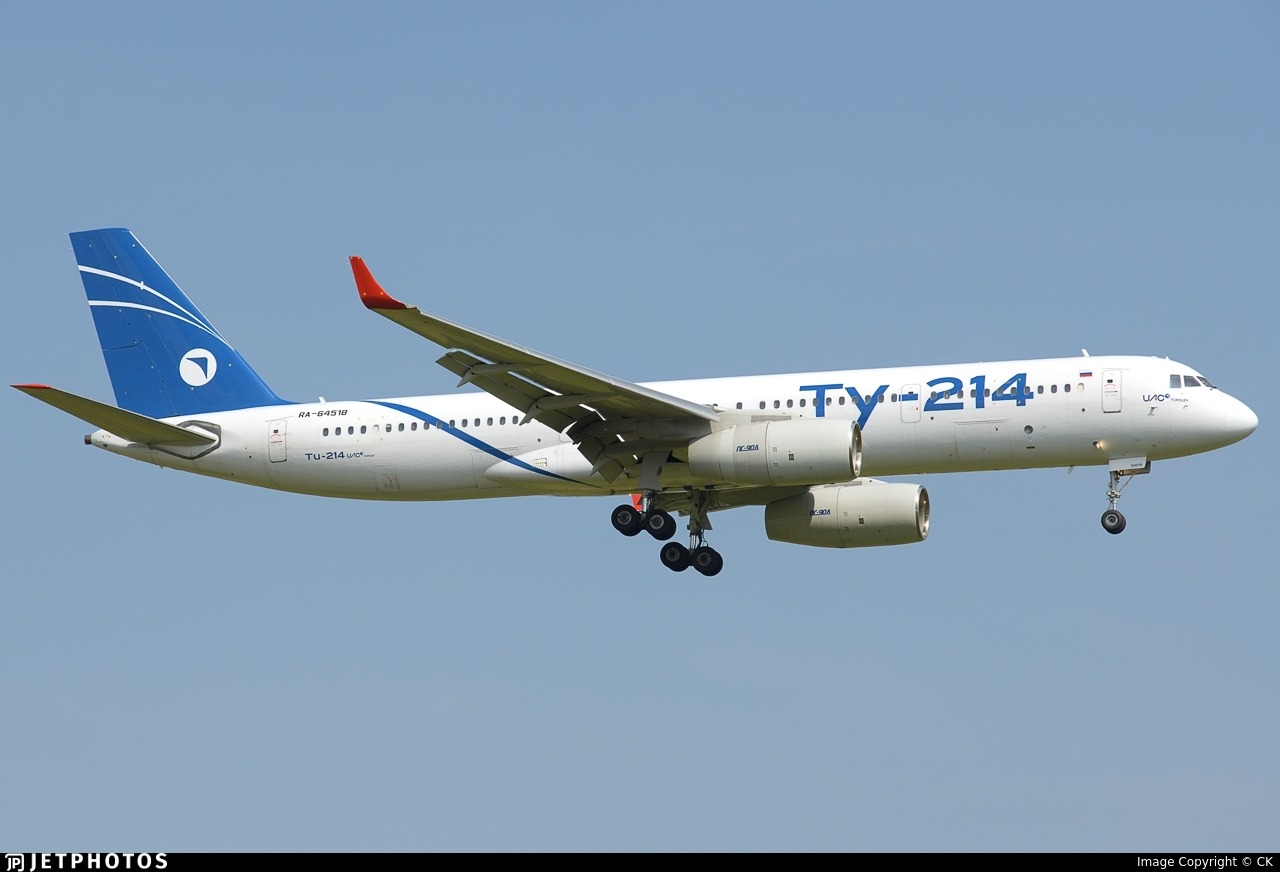
The most notable domestic development is a new agreement between UAC, the S7 Group, and the State Transport Leasing Company. These parties have signed a preliminary agreement for the delivery of up to 100 Tu-214 aircraft, which are medium-sized planes designed for main domestic routes. While the first of these planes are expected to be handed over to the airline after 2029, the companies intend to sign final, legally binding contracts by the end of 2026. This deal is tailored specifically for S7 Airlines, with a cabin layout designed to hold 213 passengers. The partnership is structured so that the state leasing company provides the necessary financing, while S7’s own technical division handles the long-term maintenance of the fleet.
Beyond its borders, UAC is positioning India as its most vital partner for future exports. In late October 2025, UAC and the Indian state-owned manufacturer Hindustan Aeronautics Limited (HAL) agreed to cooperate on the SJ-100, a regional jet designed for shorter flights. Under this arrangement, HAL plans to initially lease between 10 and 20 of these jets to gain experience before moving toward full-scale local manufacturing in India. This follows a model previously used for military jets, where technology is shared so the partner country can eventually build the planes themselves. Leaders at UAC suggest that the first Indian-made SJ-100 could be completed within three years, with a goal of producing up to 40 units annually. Furthering this Indian expansion, UAC also reached an agreement at the Wings India 2026 show to supply six smaller Il-114-300 turboprop planes to a new Indian company called Flamingo Aerospace, with deliveries starting in 2028.
These international moves coincide with the upcoming debut of the MC-21, Russia’s primary new airliner intended to compete with popular global models. Aeroflot is scheduled to receive its first MC-21 in 2026, following the official approval for mass manufacturing granted in early 2025. While the initial output is modest—with only two jets expected to reach customers by the end of this year—the government hopes to ramp up production to 36 planes per year by 2030. To support this, the Russian government made a strategic decision in December 2025 to pause work on a much larger long-range aircraft. Instead, it moved 2.6 billion rubles of funding directly into the MC-21 and Tu-214 programs to ensure these more immediate projects succeed.
This aggressive push for growth is born out of necessity, as Russia works to replace its fleet of foreign-made aircraft with domestic alternatives. The Tu-214, which is based on an older but reliable design, recently reached a major milestone by receiving regulatory approval for its new, entirely Russian-made flight systems. This came after engineers successfully replaced 17 critical components that were previously sourced from abroad. Production at the Kazan factory is now scheduled to increase gradually, aiming for 20 planes a year by 2028. However, the industry still faces a steep climb. Since 2022, only a small number of new commercial jets have been completed, and the transition to full-scale manufacturing has faced several delays due to the complexity of building sophisticated aircraft without traditional international suppliers.
