
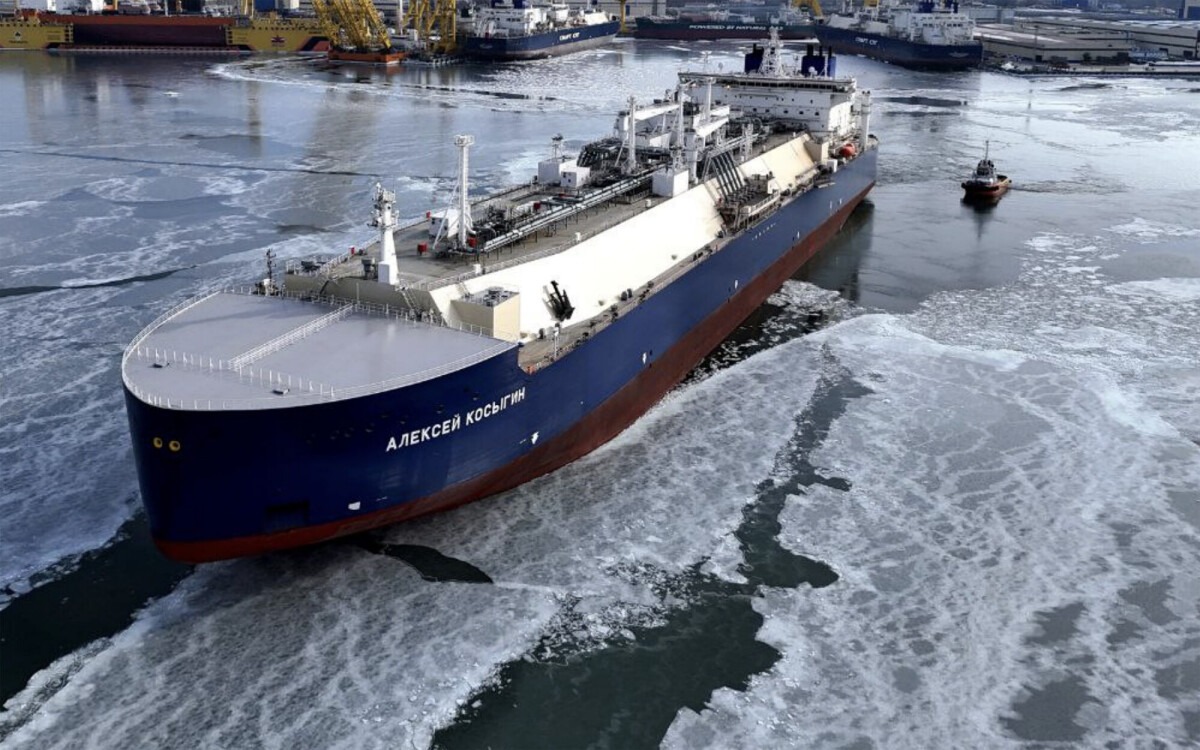
Russia has reached a major milestone in its Arctic energy ambitions by successfully testing its first domestically built tanker designed to carry liquefied natural gas (LNG) through thick ice. This new vessel is a significant boost for the country’s energy sector, which has faced major hurdles due to international trade restrictions aimed at limiting its fuel exports.
The tanker, named the Alexey Kosygin, was built at the Zvezda shipyard in Russia and officially entered service in late 2025. During its trial run, the ship traveled across the Northern Sea Route in about 13 days. It moved at a steady pace through the frozen waters while being guided by a powerful nuclear-powered icebreaker. The vessel is now hard at work transporting gas for Russia’s largest private energy producer.
This ship is vital for a massive gas project located on the Gydan Peninsula. This project has struggled to get its fuel to market because international sanctions blocked the delivery of specialized ice-breaking tankers previously ordered from South Korean shipbuilders. Currently, five completed ships are stuck in South Korea and cannot be delivered, leaving the Russian project short on transport options.
The arrival of the Alexey Kosygin effectively doubles the project’s ability to export gas during the harsh winter months. Before this, only one other ship of this type was available for year-round operations in the region. While this is a step forward, the project is still operating well below its full potential because it simply doesn’t have enough ships to carry all the gas it is capable of producing.
Industry experts estimate that even with this new addition, the available fleet can only move about a third of the gas the facility is designed to output. While the shipyard plans to deliver two more similar tankers in 2026, experts warn that further delays are likely. The same trade restrictions that blocked the foreign-made ships also make it difficult for Russian builders to access the high-tech equipment and specialized knowledge needed to finish more vessels.