

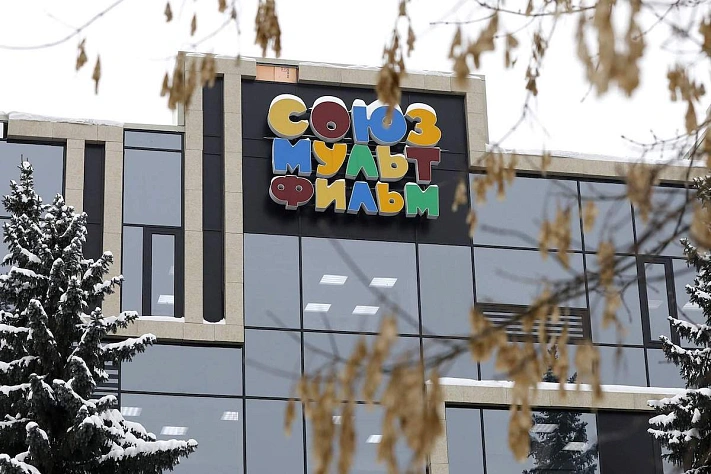
Russia’s Soyuzmultfilm, the animation studio behind some of the Soviet era’s most enduring children’s classics, is in talks with Indian producers to co-produce a full-length animated film based on the Mowgli universe. The project was announced on February 27 by Yuliana Slashcheva, chairwoman of the studio’s board of directors, in an interview with Russian business daily Vedomosti. Negotiations are still at an early stage, but Slashcheva called the prospects “very promising.”
A story that belongs to both countries
For Indian audiences, the pitch needs little explanation. Rudyard Kipling set The Jungle Book in the forests of central India, and Mowgli — the boy raised by wolves among Baloo the bear, Bagheera the panther, and Kaa the python — has been part of Indian popular culture for over a century. What may surprise Indian readers is how deeply the story took root in Russia too. Between 1967 and 1971, Soyuzmultfilm produced its own acclaimed animated adaptation, directed by Roman Davydov. The five-episode series was re-edited into a feature film in 1973, and that hand-drawn version, with its expressive characters and lyrical pacing, remains a classic of Russian animation to this day.
The studio’s path to India runs, perhaps unexpectedly, through Singapore. Soyuzmultfilm has been acting as a Russian distribution partner for Mowgli and Akira, a children’s series produced by Singapore-based PowerKids Entertainment in collaboration with partners across Asia. That experience — bridging Asian content producers and the Russian market — is now being cited as proof of concept for a more ambitious direct partnership with India.
Soviet-Indian cinema: a forgotten chapter
A Russian-Indian animation co-production would revive a tradition that goes back to the Cold War, when the two countries’ film industries worked in close partnership. The most celebrated joint project was Journey Beyond Three Seas (1957/1958), a historical epic about the 15th-century Russian merchant Afanasy Nikitin — one of the first Europeans to travel overland to India. The film was a co-production between Moscow’s Mosfilm and India’s Naya Sansar, starred Russian actor Oleg Strizhenov alongside Bollywood legend Nargis, and competed at Cannes in 1958. Other Soviet-Indian co-productions followed, including The Adventures of Ali Baba and the Forty Thieves (1980).
A separate but related thread runs through Kipling adaptations specifically. The Soviet children’s film Rikki-Tikki-Tavi (1975) — starring Alexei Batalov and Margarita Terehkova, with Indian actors in supporting roles — was shot partly on location in India. It was not a formal co-production, but it illustrates how naturally Indian settings and stories fit into Soviet filmmaking of the period.
Roman Mikhailov shot two films there in 2025, and a new feature, Pearl by Tina Barkalaya, opens in Russian cinemas on 12 March 2026 — a sign that the creative pull between the two countries extends well beyond animation.
The business case
Founded in 1936 and often described as the Disney of Soviet animation, Soyuzmultfilm has produced over 1,500 cartoons. Its “Golden Collection” — which includes beloved characters such as Cheburashka, a round-eared creature of indeterminate species who became a Soviet cultural icon, and the hapless wolf from the long-running chase series Well, Just You Wait! — remains central to Russian cultural identity. After a difficult period in the 1990s following the Soviet collapse, the studio staged a revival and was privatised in autumn 2025, passing from full state ownership to private hands for the first time.
Under a new three-year strategy for 2026–2028, Soyuzmultfilm is repositioning itself as a brand-holding company rather than a pure animation studio. International expansion is a central pillar. In 2025, the studio sold rights in 120 countries, up from just 8 before 2022. Export revenues, however, remain modest — around $1 million, roughly 3% of total annual revenue of 2.5 billion roubles (approximately $28 million).
China leads the studio’s overseas distribution, with the children’s series Umka airing on state broadcaster CCTV-14. The Middle East comes second: Qatar’s beIN Media Group acquired exclusive rights to the Rockoons series in 2025, while other titles appeared on Arab platforms Spacetoon and Shahid. Southeast Asia is the third priority — and India, with its vast children’s audience and booming animation consumption, is the natural next step.
The challenge ahead
That next step will not be easy. Veronika Skurikhina, editor-in-chief of the Russian trade publication Bulletin of Film Distributors, is direct about the obstacle: Russian content is almost entirely absent from Indian screens, and domestic cinema consistently outperforms even Hollywood there. Without a genuine local partner shaping the project, she argues, the chances of breaking through are slim. Jean Prosyanov, producer and publisher of the Russian film portal Kino-Teatr.ru, takes a more optimistic view — Kipling’s characters are embedded in the cultural memory of both nations, and that gives the project a head start that most cross-cultural pitches simply do not have.
Whether the talks lead to an actual production remains to be seen. In animation, the gap between announcement and release is measured in years. But the underlying logic is hard to argue with: a story written by a British author, set in India, and cherished by generations of Russian children is about as close to ready-made shared heritage as a co-production pitch gets.

