


India’s share of Russia’s textile import market is negligible. A new exhibition in Moscow is part of an effort to change that.
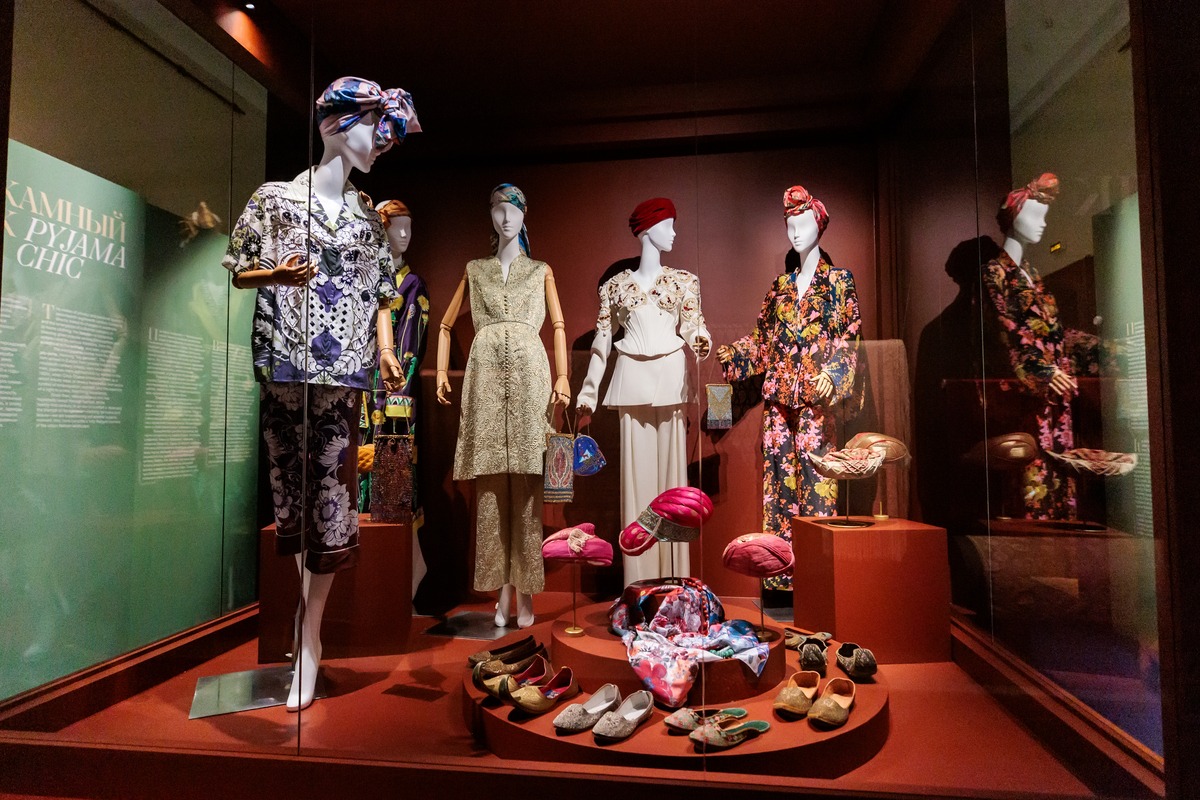
India. Fabric of Time opened this month at the Tsaritsyno Museum-Reserve, a 250-year-old estate in southern Moscow that draws around two million visitors a year. The show is the first in Russia to draw on the collection of New Delhi’s National Crafts Museum & Hastkala Academy — a Ministry of Textiles institution housing over 35,000 artefacts — and brings together more than 300 textiles and costumes from Indian and Russian museums, private collections, and fashion houses. It is timed to mark the 25th anniversary of the India-Russia Declaration on Strategic Partnership, signed in October 2000.
The trade subtext is explicit. India’s Minister of State for Textiles visited Tsaritsyno in October 2025, ahead of the opening, citing the venue’s two-million annual footfall as a showcase opportunity. India’s textile and apparel exports reached $37.8 billion in the 2024–25 fiscal year, and the government has set a target of $100 billion by 2030; Russia, with its large import bill and negligible Indian share, is an obvious candidate for expansion.
The exhibition itself spans seven galleries of the Grand Palace, each devoted to a distinct material or craft tradition. The embroidery hall pairs zardozi — the gold-thread embroidery of the Mughal imperial court — with chikankari, a delicate white-on-muslin embroidery tradition from Lucknow. The ornament gallery traces a single motif: the teardrop-shaped buta of Kashmir, which conquered European drawing rooms in the eighteenth century as the paisley pattern, and resurfaced as a countercultural symbol in the 1960s.
Several pieces are leaving India for the first time. The loans include brocade saris from Varanasi and Kanchipuram — both among Hinduism’s seven sacred cities and centuries-old centres of silk production — hand-painted kalamkari panels from Andhra Pradesh, phulkari wedding textiles from Punjab, and embroidered Kashmiri shawls. On the Russian side, the Hermitage, the Pushkin State Museum of Fine Arts, the State Museum of Oriental Art, and the State Historical Museum have contributed pieces that close the loop: a nineteenth-century headdress from Tver province and a shawl of the same period, both embroidered in patterns that trace back to the Indian chikankari tradition.
The curatorial argument runs against the grain of conventional fashion history. Indian textiles, the exhibition contends, were shaping global aesthetics centuries before globalisation became a concept. Works by Oscar de la Renta, Valentino, and several Russian designers hang alongside the historical pieces to make the point concrete.
The show runs until 12 April 2026. More than 30 public events — curator tours, natural-dyeing and weaving workshops, fashion-history lectures — are scheduled over its run. For Moscow’s museum sector, the timing is notable: attendance across the city’s Department of Culture venues rose 30 percent in 2025, and Tsaritsyno ranked among the most visited sites. Whether the cultural momentum translates into trade flows is a separate question — but the exhibition makes clear that both sides intend to ask it.

