


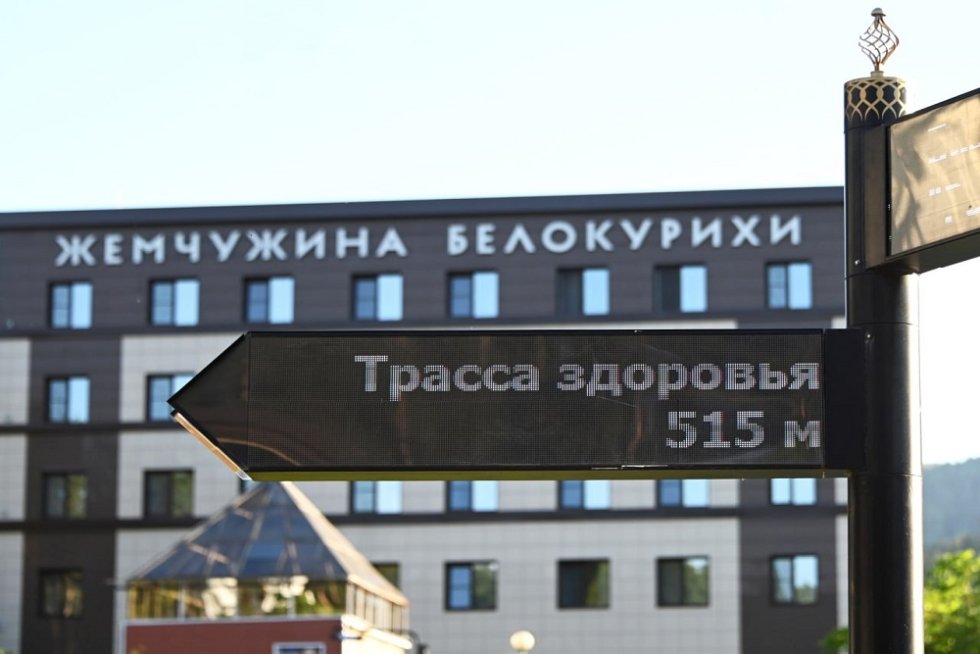
Wellness tourism has become increasingly attractive to investors in recent years. In the Altai Territory, the new resort Belokurikha Gornaya is being actively developed, while new spa and medical-wellness facilities are being built in the older Belokurikha resort area. According to experts, amid the growing popularity of wellness tourism, such projects appeal to investors thanks to their high margins and quick payback periods, especially in the premium segment.
“Since 2016, we have been compiling the Top 100 Russian Health Resorts ranking, where we evaluate industry enterprises based on their economic and financial performance,” said Mikhail Danilov, Medical Director of the Association of Health Tourism and Corporate Wellness. “We also have a special category for newly opened or fully renovated sanatoriums. Until 2024 it was difficult to find even a single facility that fit this category. In 2024 we had three, and this year there are already several dozen at various stages of completion—from excavation to commissioning. So, in the next three or four years, we expect a boom in wellness-tourism openings.”
Why Investors Choose This Sector
According to Mikhail Sheldunov, head of the Project Implementation Directorate at Tourism.RF Corporation, balneological and spa-resort tourism is currently among the most promising areas in the industry. It is only minimally affected by seasonality, has a stable financial model, and enjoys steadily rising demand among Russian consumers. Global trends also support this: as inbound tourism develops, wellness products may become some of the most in-demand offerings.
A telling example is the Tyumen Region. Known for the largest oil and gas complex in Siberia, the region has also become a major destination for thermal-spring recreation over the past seven years.
“We began to seriously develop tourism only in 2017, when we decided to promote wellness trips to the hot mineral springs discovered during oil-well drilling in the mid-20th century,” said Maria Trofimova, head of the Consumer Market and Tourism Department of the Tyumen Region. “Of course, we had health facilities and sanatoriums since Soviet times. But five years ago, investors began actively investing in the sector, and more than ten new thermal-spring facilities have already opened. Hotels, restaurants, and transport and road infrastructure developed along with them.”
As a result, while the region welcomed around 800,000 visitors in 2016—mostly business travelers—by 2024 the tourist flow exceeded four million people, 75 percent of whom came for leisure. Tourism-related budget revenues rose accordingly—from 0.4 billion to 3.9 billion rubles.
A 150-Year Tradition of Wellness Tourism in Altai
The Altai Territory has been developing wellness tourism for more than 150 years, ever since the first radon bath was built in Belokurikha in the mid-19th century. According to Alexander Baryshnikov, head of the regional Tourism and Resort Development Department, sanatoriums at the federal Belokurikha resort receive more than 300,000 people annually, while total tourist traffic to the region exceeds two million.
Since Belokurikha sometimes struggles to accommodate all visitors during the summer peak season, construction of the nearby new resort—Belokurikha Gornaya—began in 2013. It already features hotel, spa, and ski-biathlon complexes; wellness and dining facilities; the historical and architectural complex Andreyevskaya Sloboda; and the Mishina Gora ski run.
“Since 2022, Tourism.RF, together with regional authorities, has been developing the Belokurikha Gornaya cluster,” Sheldunov noted. “This federal project is popular with tourists, and investors have no doubts about its potential occupancy or financial performance. The state has already invested about three billion rubles, which made it possible to build the necessary supporting infrastructure, prepare land plots, and create investment lots for further development.”
Challenges With the Radon Pipeline
However, difficulties have arisen with the construction of a radon pipeline. The explored Iskrovskoye mineral-water deposit containing radon lies eight kilometers from the new resort. Budget funding for the pipeline—over one billion rubles—will be allocated only after investors begin developing all prepared land plots.
“Our main task now is to attract investors who will build sanatoriums and hotels,” Sheldunov said. “We have prepared four development projects with total private investment of 15 billion rubles. Two of them are unique for the Russian market because they include support measures such as preferential loans.”
For a four-star spa hotel with 200 rooms requiring about six billion rubles, and for a three-star hotel with 40 rooms valued at 2.5 billion rubles, loans at around nine percent interest have been approved. The rate is tied to the Central Bank’s key rate, so with the current downward trend, borrowing costs are expected to decline.
“We hope to find investors for all four lots by early 2026. Business is also showing interest in the older Belokurikha. In recent years several hotels—including a five-star one—tourist lodges, estates, and restaurants have been built there. And in August 2025, the Azimut Hotels group began constructing a multifunctional five-star sanatorium-hotel complex worth more than five billion rubles,” he added.
“We secured preferential financing intended to support domestic and inbound tourism,” said project manager Artem Ivanov. “All utilities, including the radon pipeline, have already been brought to the site. The complex, with a total area of 20,000 square meters, will include an eleven-story hotel with 220 rooms and a seven-story medical building, and is scheduled for commissioning at the end of 2027.”
Profitability and Risks
According to company representatives, even considering rising construction and material costs, returns on investment in Belokurikha remain significantly higher than current loan rates. Moreover, sanatorium profitability often exceeds that of hotels of a similar class. Vladimir Volnin, a leading Moscow-based expert in the med-spa hotel and sanatorium market, confirmed that premium-segment projects are indeed highly profitable, offer good returns, and typically pay off within six to eight years.
At the same time, he was skeptical about the possibility of quickly attracting investors to build four spa-resort facilities in Belokurikha Gornaya.
According to Volnin, the projected return on these projects—only 10–12 percent per year—is below the Central Bank’s key rate. And when compared with the yields of government bonds, investors may think twice before committing funds. “The lower the star rating, the longer the payback period. For three- to four-star projects, it is 12–14 years. And that’s a high risk, because a great deal can change in the economy and politics over such a long period,” the expert concluded.

