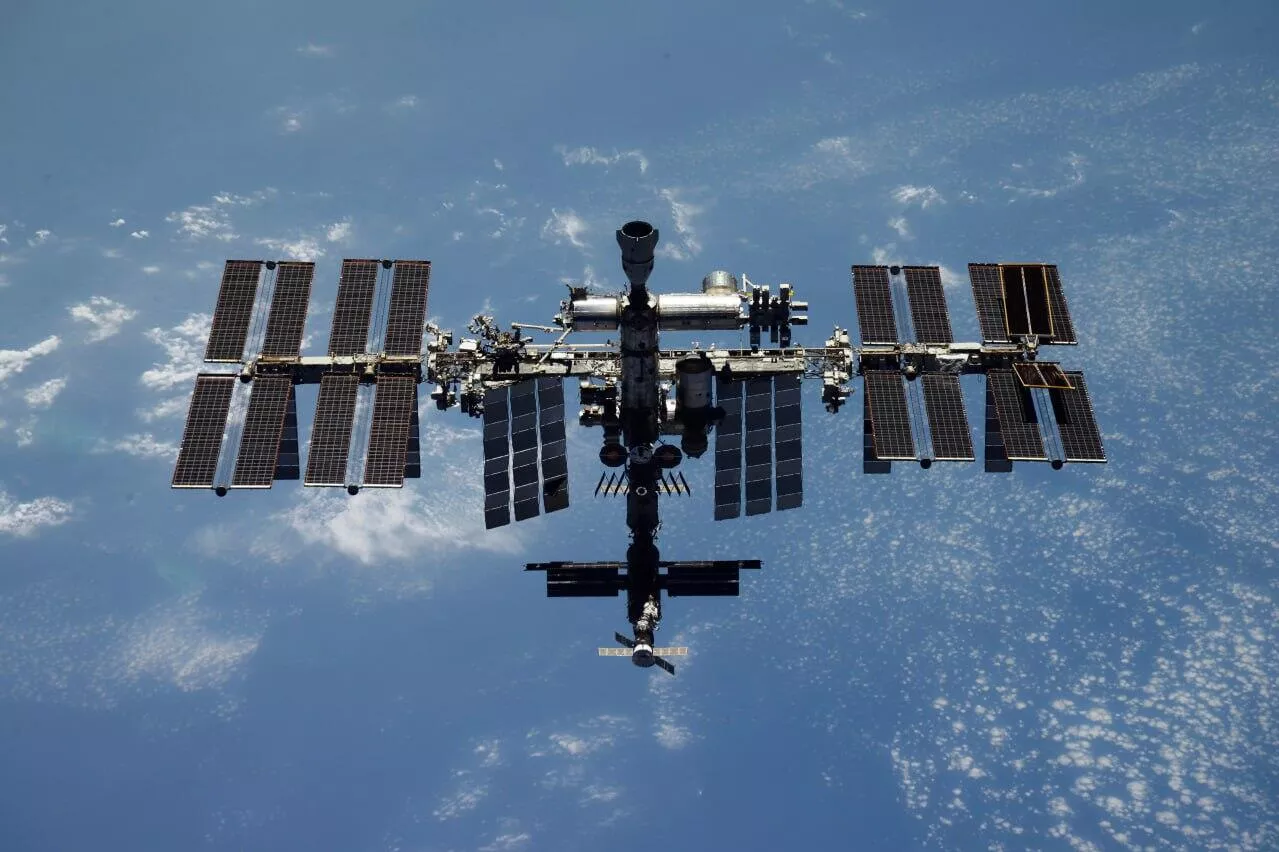
Russian cosmonauts Sergei Ryzhikov and Alexey Zubritsky, speaking via video link from the International Space Station to participants of the 5th Congress of Young Scientists on the federal territory of Sirius, described the sound they would least wish to hear on the orbital outpost, a RIA Novosti correspondent reports.
Ryzhikov explained that the acoustic environment of the station can, to an extent, be compared to that of aircraft systems, with numerous operational devices contributing to background noise.
“Of course, the main difference is the abundance of fans that ensure air circulation throughout the station. But the sound one would least want to hear is the hissing of escaping air. I hope that neither we nor our colleagues will ever encounter it,”
said Hero of Russia and test cosmonaut Sergei Ryzhikov, responding to a question about the most unexpected or alarming sound on the ISS.
During the interactive session, the cosmonauts answered a broad range of questions, including those related to the specifics of nutrition during a space mission, the training and qualifications required for astronauts, and they also demonstrated how water droplets merge in microgravity.
“At such events, we sense a growing interest not only in space exploration but in scientific research as a whole — and in personal development for the benefit of oneself, our Motherland, and all humanity,”
the cosmonauts remarked at the conclusion of the discussion.
The anniversary 5th Congress of Young Scientists is taking place on the federal territory of Sirius from November 26 to 28. The event is a key annual component of the Decade of Science and Technology (2022–2031), proclaimed by President Vladimir Putin.
The Congress traditionally brings together leading researchers from Russia and abroad to discuss prospects for international scientific cooperation, identify effective collaboration strategies between science and industry, present scientific achievements, pitch new projects, and facilitate informal interaction among young scientists.
In 2025, the forum is expected to host over 7,000 participants from more than 80 countries. The program includes over 230 business, cultural, and sports events.