

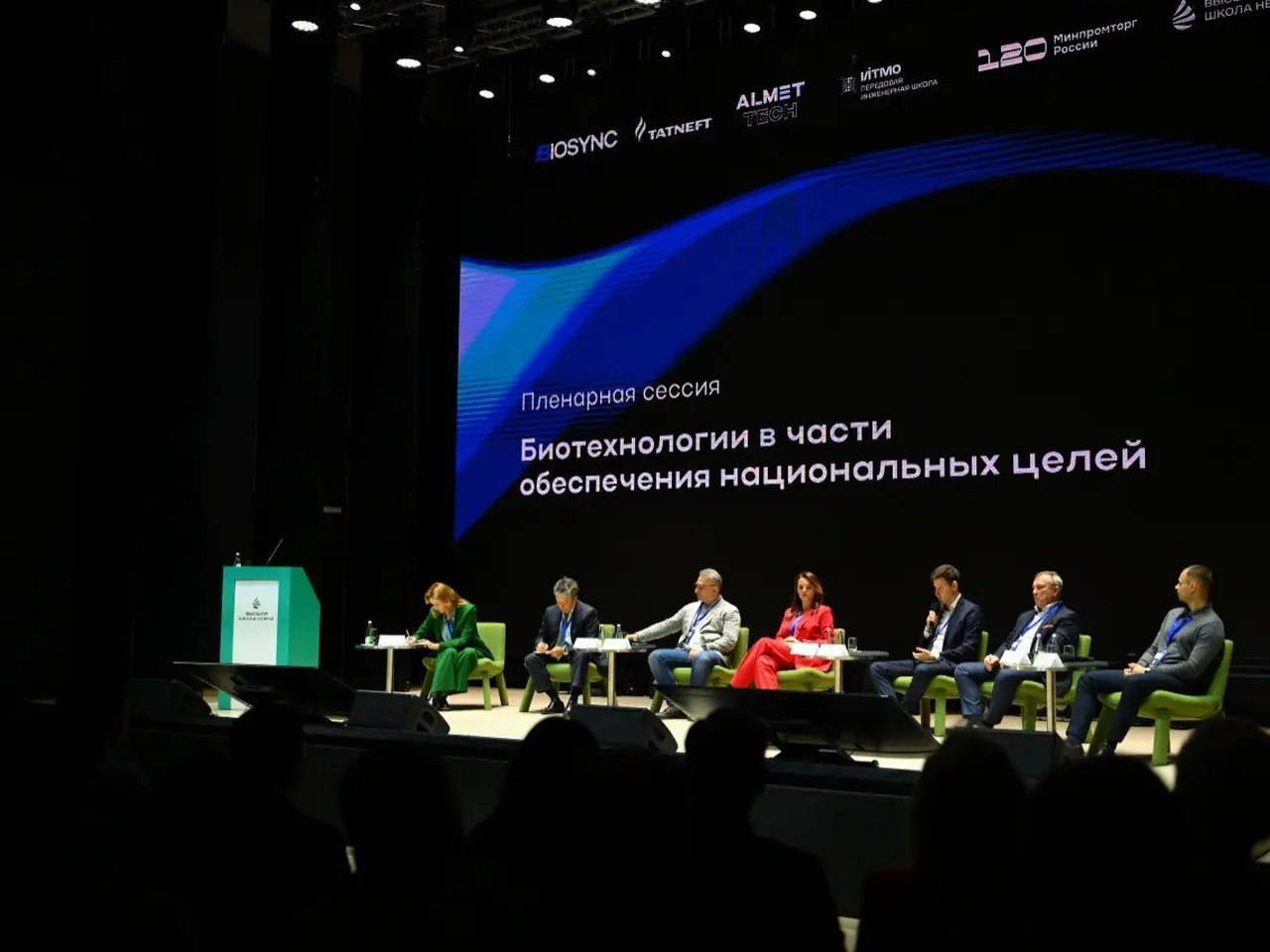
Russian energy company Tatneft is intensifying its focus on biotechnology as a key growth area, company executives and industry participants said at the international BIOSYNC-2025 biotechnology forum in Almetyevsk. The event brought together government representatives, research institutions and business leaders to discuss the role of biotechnology in Russia’s economy and the company’s future direction.
Biotechnology refers to the use of biological processes, organisms, or systems to develop products and technologies, from food and medicine to environmental solutions. Although the term “biotech” is not widely understood by the general public, it underpins a range of everyday products and industrial applications, including dairy products, vitamins and antibiotics.
A new national project “Biotechnological Economy”, scheduled to launch in Russia in 2026, underscores the sector’s strategic importance. BIOSYNC-2025 was conceived to align efforts by government, scientific centers and businesses to support the goals of this national initiative.
According to speakers at the forum, the pace of technological development in biotechnology is accelerating globally. Maxim Patrushev, head of the Genomics Center at the Kurchatov Institute’s National Research Center, noted that typical biotech development cycles have shortened from 5.5 years in 2015, to three years in 2020, and now to less than two years. Russia, he said, must not only keep pace but aim for technological leadership and independence.
At the same time, Tatneft is positioning itself as one of the pioneers of biotechnology in Russia, anticipating broader state support for the sector. Nail Maganov, Chief Executive Officer of Tatneft, said the company views biotechnology as “an important growth point” that is effective for business and opens new opportunities in scientific development. He noted that Tatneft is closely linking its biotech solutions with traditional activities such as petroleum refining and petrochemicals to produce novel, high-quality products.
The forum highlighted projects in rural and industrial settings demonstrating applied biotechnology. For example, in the village of Aktyubinsky near Almetyevsk, biotechnology initiatives have helped transform the settlement into an energy-efficient community. Biogas installations convert livestock waste into electricity, while fast pyrolysis facilities process wood residues into bio-oil and biochar, which can be used in fuel and agricultural applications.
Participants also discussed the development of human capital. Tatneft has supported biotechnology education from school laboratories to advanced scientific training. Partnerships with institutions such as the Advanced Engineering School of ITMO University and the Higher School of Oil in Almetyevsk enable students and researchers from across Russia to work on biotech projects, bridging the gap between academic research and practical industrial applications.
Experts at the forum emphasized that coordinated efforts in science, education and industry are essential to building a robust biotechnology ecosystem in Russia, and that Tatneft’s projects could help position the region as a leader in selected biotech fields.