


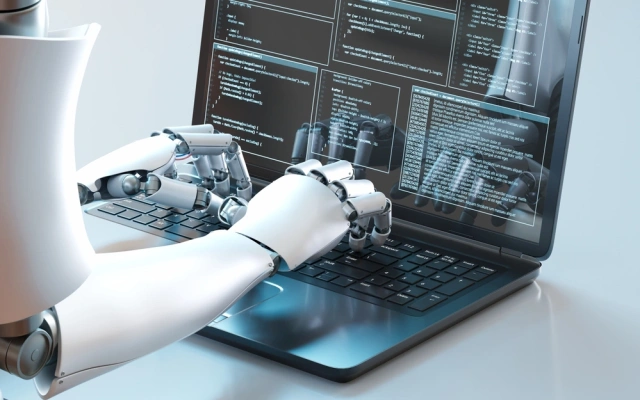
When Gartner predicted back in 2018 that software teams would soon rely heavily on AI, few imagined how quickly it would happen. By 2023, AI was generating 41% of all new code, and by 2024 global models had produced 256 billion lines. In Russia the trend is steady: 20% of developers used AI tools in 2024, up from 7.9% in 2022.
A 2024 Stack Overflow survey of 65,000 developers shows the new reality:
-
82% use AI for writing code,
-
57% for fixing bugs,
-
40% for documentation,
-
27% for testing.
The most promising areas for further automation are documentation, testing, and code generation.
New Roles in Development
AI is changing the work of analysts, developers, and testers. Routine tasks — from test writing to code restructuring — shift to neural tools. Productivity gains reach 50%. With a clear set of requirements, AI can even produce an MVP, though experienced engineers still refine and launch the product.
Tools like Cursor, Windsurf, GitHub Copilot, GigaCode, Kodify, and others now help write code, explain algorithms, summarize meetings, and generate test cases. Increasingly, AI’s value lies in information search and handling secondary tasks, including documentation. At the prototyping stage, it cuts development from months to weeks.
Analysts use AI for summarizing meetings, processing documents, and early requirements work. Local platforms such as Landev AI’s “Silicon Assistants” allow teams to run large language models securely within the company perimeter.
Security and Risks
AI assistants consist of a development interface and a language model — cloud or local. Cloud use sends data outside company boundaries, which is often unacceptable. Local deployment solves this but requires powerful hardware. As experts note, “The cloud is just someone else’s computer.”
For confidential work — especially involving vulnerabilities — internal infrastructure is essential.
How Businesses Should Introduce AI
AI’s spread changes how digital products are built. Developers who avoid these tools risk losing competitiveness quickly. But trying to “solve everything with AI” is a mistake. Companies should:
-
identify simple, automatable tasks;
-
define what data may be shared externally;
-
train staff to interact with models;
-
build an internal knowledge base;
-
use local models for sensitive projects.
AI will not replace human judgment: developers must validate generated code and maintain architectural coherence.
A Hybrid Future
AI is now a stable part of software development, and its influence will grow as open-source models improve and local deployments become common. The future lies in hybrid work: neural tools handle repetitive coding and analysis, while engineers design, supervise, and make creative decisions.
Soon AI will become as ordinary as an IDE or a static analyzer — yet its quiet impact will keep transforming how software is imagined and built.

