


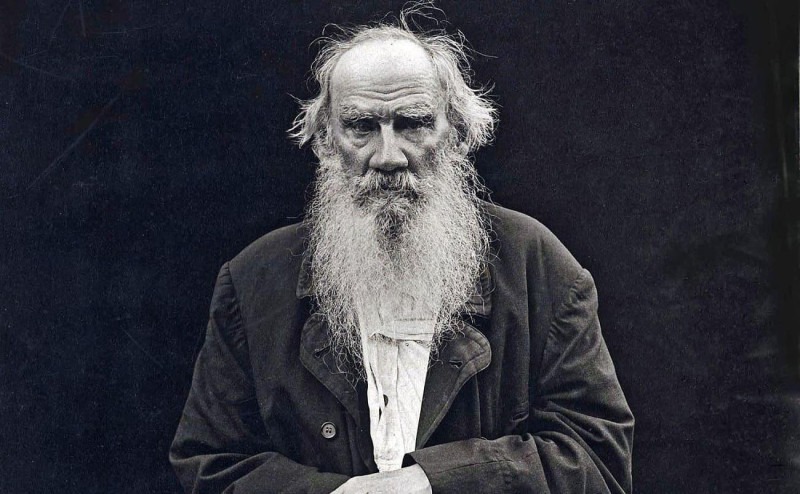
In October 1909, an obscure Indian lawyer practicing in Johannesburg sat down to write a letter to an old man on a country estate near Tula. “It has been my privilege,” the letter began, “to study your writings, which have made a deep impression on my way of thinking.” The old man replied at once. The lawyer was Mohandas Gandhi, who would secure India’s independence almost four decades later. The old man was Leo Tolstoy, and it was his treatise The Kingdom of God Is Within You that had given Gandhi the philosophical grounding for what he would come to call satyagraha.
This correspondence raises a question worth taking seriously. How does a private religious-philosophical system, worked out by one man during a personal spiritual crisis, become an instrument of real political change? And why did the same system that Lenin contemptuously dismissed as a “holy-fool’s sermon” prove more effective, in the long run, than many revolutionary programs built on force?
A Spiritual Crisis as Philosophical Method
Tolstoy was born in 1828, and for the first half-century of his life he lived what he would later judge to be a wasted existence: war, hunting, gambling, social triumphs, literary fame. The crisis that overtook him at the turn of the 1880s is described in A Confession with merciless precision—a portrait of a man at the summit of worldly success who could no longer answer the question of why he should go on living.
Climbing out of that abyss took years. Tolstoy taught himself Hebrew and ancient Greek to read sacred texts in their original languages. He spent several years attempting to live according to Orthodox practice, with its prayers, fasts, and sacraments. He turned to Buddhism, Confucianism, and Islam.
Here it is worth pausing on a common misconception. Tolstoy is often said to have arrived at his philosophy of nonviolence through a sudden religious conversion in the late 1870s. This is not quite accurate. Already in the 1860s—in his unfinished essay “On Violence,” in War and Peace, and in the essays adjacent to that novel—one finds a developing distrust of the state as a source of systemic coercion, and a clear distinction between individual and institutional violence. The spiritual crisis of the 1870s gave these ideas a religious foundation and turned them into a program; it did not invent them from nothing.
By the early 1880s, Tolstoy had reached a conclusion that might seem disarmingly simple: the meaning of life consists in fulfilling the commandment of love, formulated most precisely in the Sermon on the Mount. But the literalness with which he accepted this principle determined everything that followed.
The Fourth Commandment: A Radical Reading
In What I Believe, written in 1883–1884 and immediately suppressed by Imperial Russian censorship, Tolstoy laid out the core of his system. He drew five commandments from the Sermon on the Mount: do not be angry, do not abandon your wife for another, do not swear oaths, do not resist evil with violence, do not distinguish between your own people and foreign peoples. The fourth became the keystone.
The Gospel verse he relied on was Matthew 5:39: “But I say unto you, that ye resist not evil.” Tolstoy insisted that he was not interpreting this passage but taking it at its word. That literalism is precisely what gives his position its philosophical radicalism. In The Kingdom of God Is Within You (1893)—the longest of all his treatises, surviving in a manuscript archive of more than thirteen thousand pages and circulating inside the Russian Empire mainly through German editions—he systematically dismantled the five standard ecclesiastical responses to his argument. First: violence does not contradict Christianity. Second: it is necessary to restrain evildoers. Third: it is required to protect one’s neighbor. Fourth: violations of the commandment merely reflect human weakness. Fifth: the question was settled long ago.
Tolstoy treated each of these as logically untenable. His objection to the fifth is especially pointed: the question of violence cannot be “settled long ago,” because life itself poses it anew to every individual—at the moment when he is required to serve on a jury, pay a war tax, or take up arms.
This is where the central insight of the entire system emerges. Tolstoy saw violence not merely as a moral evil but as a self-replicating mechanism: evil met with answering evil is not extinguished but multiplied. In The Law of Love and the Law of Violence (1908), the philosophical testament he completed at the age of eighty, he formulated this with absolute clarity. Any political program—conservative or revolutionary—is doomed if coercion stands at its base, because coercion cannot produce inner consent, and only inner consent generates a stable order. Governments and revolutionaries, he wrote, resemble people tearing down the walls of a house in order to keep warm.
Nonresistance Is Not Passivity
The familiar picture of nonresistance as passive submission to evil is one of the most persistent misreadings of Tolstoy, and one he attacked vehemently himself.
In What I Believe he stated it plainly: Christ does not say “turn your cheeks and suffer”—he says “do not resist evil with violence,” and the suffering that may result is a possible consequence, not the goal. The distinction matters. The forms of nonviolent resistance Tolstoy had in mind were entirely concrete: public protest, appeals to conscience, refusal to participate in the machinery of violence—military service, courts, tax collection, government office. This is the path of conscious, deliberate, public nonparticipation. It is an active stance, not a withdrawal from the world.
It was precisely this misunderstanding that gave rise to the most famous polemical trap directed at his thinking—the “innocent victim” argument. Strikingly, the argument first appears not in the writings of his external critics but inside Anna Karenina itself, in the dispute between Koznyshev and Levin about the Russo-Turkish war: Koznyshev asks whether a man is not obliged to use force in defending the innocent. Tolstoy thus framed the objection himself, and then went on to refute it across his treatises. His answer was structural. The argument substitutes a question about principle with a question about an extreme case, and then, having extracted a justification for violence in a single situation, extends it to the institutional violence of the state—armies, prisons, executions—which has nothing in common with a brigand attacking a child.
God Without the Church: A Theological Radicalism
Tolstoy’s philosophy of nonviolence is inseparable from his religious reformation, which proved even more scandalous than his political conclusions.
Having accepted the commandment of nonviolence as an absolute norm, Tolstoy immediately discovered that the Orthodox Church systematically violated it: blessing wars, sanctifying executions, propping up the state order. His verdict was unsparing. The Church, he concluded, had sacrificed the substance of Christianity for an alliance with power. More than that, it had distorted the teaching of Christ itself, transforming a practical ethics into a mystical doctrine of posthumous salvation. Church sacraments he called “crude sorcery”—those are the words that stand in his “Reply to the Synod.”
The collision was inevitable. On February 24, 1901, the Holy Synod issued its “Determination on the Falling Away of Count Tolstoy from the Church.” The case had almost no precedent in the history of Russian literature: no comparable sanction had been imposed even on writers who openly preached atheism. Tolstoy responded that April with an open letter, which appeared in full only abroad due to censorship but circulated widely by hand throughout the country. The Church’s renunciation of him was just, he wrote, because he had long since renounced it. His real creed appeared in the same text: he believed in God understood as spirit, as love, as the source of all things, and in the conviction that God is in him and he is in God. To call Christ God, he wrote, was “the greatest blasphemy.”
The public reaction was the inverse of what the Synod had intended. Demonstrations of support for Tolstoy swept Russian cities, a wave of public renunciations of Orthodoxy followed, and Pobedonostsev himself was forced to admit, in a letter to the chief editor of Church News, that the determination had provoked “a cloud of bitterness” against the leaders of Church and state alike.
The Great Debate: Ilyin, Berdyaev, Solovyov
The polemic over nonresistance constitutes a chapter in Russian philosophy that holds its own, in intensity and intellectual seriousness, against the famous Western debates over war and justice.
Vladimir Solovyov, in his last work Three Conversations (1900), portrayed Tolstoy under the name “the Prince”—a young moralist and populist whose views, by the logic of the dialogue, lead toward the Antichrist. One character says directly that he does not consider the Prince to be the Antichrist himself, “but that he is nonetheless on that line.” For Solovyov, the refusal to fight evil was a capitulation to it under the mask of virtue.
Nikolai Berdyaev pushed the analysis further. In his view, the deepest source of Tolstoy’s error was a rationalism imported wholesale from European civilization: Tolstoy’s “reason,” Berdyaev wrote, “differs little from the reason of Voltaire.” Tolstoy’s system assumes that as soon as a human being grasps the law of love, he will begin to fulfill it. But an ethics resting only on reason can neither ground itself metaphysically nor supply the volitional impulse to act. The implicit content of Tolstoy’s position, in Berdyaev’s reading, is this: do not resist evil, and the good will realize itself without your effort. This Berdyaev considered a dangerous self-deception.
Ivan Ilyin built the most systematic counter-position in his book On Resistance to Evil by Force (1925). His argument was carefully framed. Tolstoy accepts the inner overcoming of evil—self-perfection, love, appeal to conscience—and in this, Ilyin acknowledges directly, he “follows the sacred tradition of Christianity.” But Tolstoy categorically rejects external, forcible suppression of evil, and this Ilyin treats as inadmissible, particularly when the victim of evil is an innocent person who has no other defense than coercive force.
Which brings us back to the argument from the innocent victim.
Gandhi, King, and the Translation of Ethics into History
The most remarkable thing about Tolstoy’s philosophy is that it was heard precisely where it was not expected to be.
Gandhi encountered The Kingdom of God Is Within You in 1893 in South Africa, where he had come to practice law. By his own account, the book “overwhelmed” him and “left an abiding impression.” In 1910, together with his friend Hermann Kallenbach, he founded Tolstoy Farm outside Johannesburg—a cooperative settlement where he developed his strategy for resisting colonial injustice. In his autobiography, Gandhi called Tolstoy “the greatest apostle of nonviolence that the present age has produced.”
But Gandhi did something with Tolstoy’s idea that Tolstoy himself had not anticipated. For Tolstoy, nonresistance was first of all a matter of individual moral choice: each person must begin with himself, and the change would spread outward from there. Gandhi proposed something else: nonviolence, satyagraha, as a form of collective political struggle. Richard Sorabji, who examined this divergence in Gandhi and the Stoics (Oxford University Press, 2012), captures the key transition precisely. Gandhi did not merely apply Tolstoy’s ideas; he supplemented them with the concept of swadharma, personal duty, which transformed nonviolent resistance from the moral choice of an individual into an obligation toward the community. He turned an ethics into a strategy, and a strategy into the instrument by which India achieved independence in 1947 without an armed revolution.
Martin Luther King Jr. carried the work one step further. Adopting the Gandhian conception of satyagraha, he developed from it the principles of nonviolent resistance that became the working method of the American civil rights movement. For King, nonviolence was not a refusal of struggle but a particular form of it—directed against injustice rather than against the unjust person, who was himself a victim of the system. In his 1964 Nobel Peace Prize address, King explicitly cited Gandhi’s approach as a “successful precedent” for the application of nonviolence in politics.
The line of transmission is striking. Treatises written on a country estate near Tula in the 1880s and 1890s became, several decades later, the foundation of a political program in South Africa, then the instrument of Indian decolonization, then the engine of the human rights struggle in the United States. In 1973, Gene Sharp of Harvard published The Politics of Nonviolent Action, the first rigorously scientific typology of methods of nonviolent struggle. The “holy-fool’s sermon” had become a subject of political science.
“Life-Teaching”: A System Inseparable from Personal Practice
Tolstoy’s doctrine is more accurately described not as a philosophical system but as a zhizneuchenie—a “life-teaching.” The word implies that an idea cannot simply be assimilated theoretically; it must be embodied in a life. And it is here that the most painful tension in the whole edifice reveals itself.
Tolstoy demanded of his teaching the same thing it demanded of others—and he honestly admitted that he was failing. In his diaries, he wrote about his irritability, his outbursts of anger, the gulf between what he professed and what he lived. This admission could be taken as an argument against the entire system. But it can also be read differently: as evidence that we are dealing not with a utopia of easy happiness but with a difficult moral imperative—one that is not annulled by the fact of being broken.
His reaction to the emergence of “Tolstoyanism” as a movement is no less revealing. When in 1892 his followers proposed holding a Tolstoyan congress at Yasnaya Polyana, his response was sharp: “Is it not a sin to set ourselves and others apart from the rest? And is not this union with dozens a separation from thousands and millions?” A movement claiming to institutionalize a principle hostile to all institutions—this was a contradiction Tolstoy saw clearly and refused to embrace.
Why Read Tolstoy Now
Tolstoy’s philosophy is uncomfortable, and that is its defining quality. It is uncomfortable for states, because it denies any state the right to coerce. It is uncomfortable for revolutionaries, because its ethic applies to everyone, including the oppressed who reach for violence in the name of liberation. It is uncomfortable for the church, because it allows no compromise between the commandment of love and the blessing of war. And it is uncomfortable, finally, for its own followers, because it offers no alibi for the moments when following it becomes hard.
Lenin—one of Tolstoy’s most acute readers—registered the contradiction precisely, if maliciously: he acknowledged the immense force of Tolstoy’s critique of exploitation and state violence, and in the same breath dismissed his answer as “the sermon of a holy fool.” But what Lenin called holy foolishness turned out, within decades of Tolstoy’s death, to be a working instrument of political change in India, and no amount of revolutionary force could have done the work better.
The formula Tolstoy returned to in different versions across nearly thirty years of philosophical labor is itself disarmingly plain. Humanity stands before a choice between the law of violence and the law of love. The first reproduces itself, feeding on the violence it provokes in return. The second requires beginning with oneself, without guarantees of immediate result. Whether the alternative actually works on the scale of history, humanity has never fully tested. But three men—Tolstoy, Gandhi, and King—demonstrated that it works at least in part.

