


India’s Ministry of Power has released the Draft National Electricity Policy (NEP) 2026 for public consultation, setting ambitious targets to transform the country’s power sector and achieve the vision of Viksit Bharat @2047 (Developed India by 2047).
On January 20, 2026, Power Minister Manohar Lal Khattar presented the draft policy framework designed to replace the existing National Electricity Policy of 2005. The new strategy reflects two decades of dramatic transformation in India’s energy landscape and establishes bold objectives for the next 20 years.
From Power Deficit to Energy Surplus: India’s Transformation
When the first National Electricity Policy was adopted in 2005, India faced fundamental challenges: chronic power shortages, limited electricity access, and inadequate infrastructure. The sector has since undergone a remarkable transformation.
Installed generation capacity has grown nearly fourfold, driven by substantial private sector participation. Universal household electrification was achieved by March 2021. A unified national grid became operational in 2013, enabling seamless power transmission across the country. Per capita electricity consumption reached 1,460 kWh in 2024-25.
Yet beneath this visible progress lie serious financial challenges. Distribution companies (DISCOMs) have accumulated losses of approximately $75 billion, with outstanding debt reaching $78 billion. Tariffs remain below cost-recovery levels, while cross-subsidization—where some consumer categories pay inflated rates to subsidize others—has pushed industrial tariffs to unsustainable levels, undermining the global competitiveness of Indian manufacturing.
Ambitious Targets Through 2047
The Draft NEP 2026 establishes several key objectives:
Electricity consumption growth: Increase per capita consumption to 2,000 kWh by 2030 and exceed 4,000 kWh by 2047, while ensuring energy efficiency and responsible usage.
Emissions reduction: Aligned with India’s commitments under the Paris Agreement, the policy targets a 45% reduction in emissions intensity from 2005 levels by 2030, achieving 50% non-fossil capacity by 2030, and reaching net-zero emissions by 2070.
Nuclear power expansion: Scale nuclear capacity to 100 GW by 2047 through private sector participation and deployment of small modular reactors, enabled by the Sustainable Harnessing and Advancement of Nuclear Energy for Transforming India (SHANTI) Act, 2025, passed in December 2025.
Financial Viability and Industrial Competitiveness
Restoring the financial health of distribution companies stands as a central priority. The policy proposes a comprehensive reform package:
Tariff reform: Tariffs will automatically adjust annually based on an appropriate index if State Commissions fail to issue tariff orders on time. Electricity bills will be restructured into two components—a fixed charge for grid connection and a variable charge for actual consumption. This approach will enable power companies to recover costs without relying on cross-subsidization.
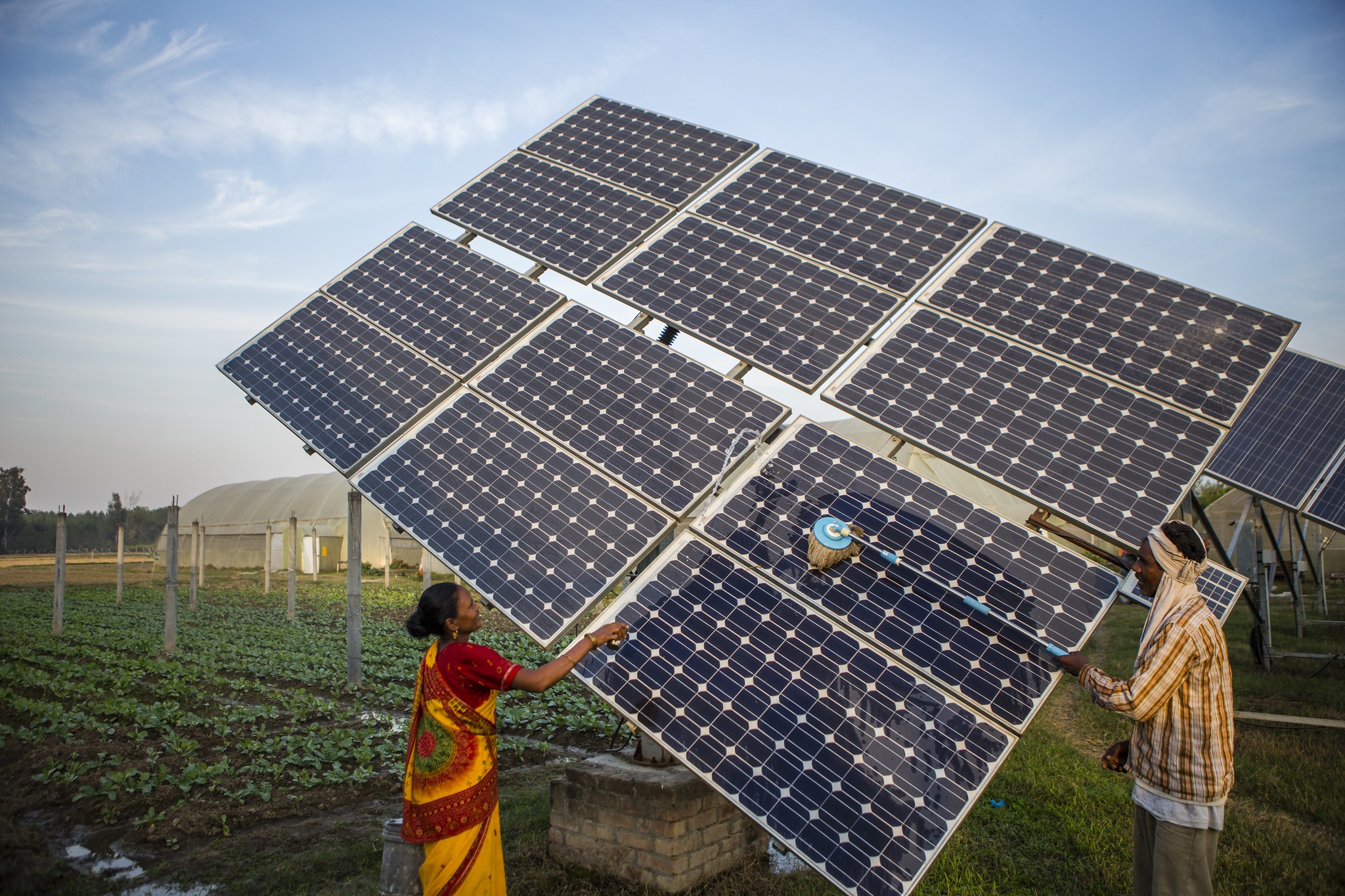
Loss reduction: States must target single-digit aggregate technical and commercial (AT&C) losses by 2030. The policy calls for completing solarization of all agricultural feeders with energy storage systems by 2030 to provide reliable daytime power to farmers and reduce state subsidy burdens.
Industrial support: Currently, industrial consumers pay elevated tariffs to subsidize other consumer categories through cross-subsidization. The strategy proposes exempting manufacturing enterprises, railways, and metro railways from these additional charges, thereby reducing production costs and transportation expenses while enhancing the global competitiveness of Indian goods.
Energy Transition: Accelerating Renewable Integration
By 2047, over 80% of installed capacity and nearly two-thirds of total electricity generation are expected to come from non-fossil sources. Variable renewable energy (VRE)—primarily solar and wind—already accounts for approximately 37% of total installed generation capacity.
The policy framework establishes several priorities for accelerated renewable integration:
Scheduling parity: By 2030 or earlier, renewable energy sources must achieve the same rights and responsibilities in grid operations as conventional power plants. This means uniform rules for power dispatch and equal accountability for deviations from scheduled generation.
Transmission tariff parity: By 2030, transmission charges for renewable energy must align with conventional generation. Currently, connecting solar and wind facilities to the grid costs more, creating a barrier to development.
Energy storage development: The policy actively encourages hybrid projects combining solar or wind installations with batteries or other storage systems. This addresses the fundamental intermittency challenge of renewables—the sun doesn’t always shine and wind doesn’t always blow, but storage enables energy to be preserved and dispatched when needed.
Special emphasis is placed on pumped storage projects and battery energy storage systems. The policy encourages domestic manufacturing of battery cells and other components to reduce import dependence.
Grid Modernization and Digitalization
The draft strategy pay special attention to infrastructure modernization:
Distribution System Operators (DSOs): The policy proposes establishing specialized operational centers at the DISCOM level for real-time network management. This becomes particularly critical when integrating distributed energy resources—rooftop solar panels, small wind turbines, batteries, and electric vehicles that can both consume and feed electricity back to the grid.
Cybersecurity: The framework mandates that all power sector data must be stored within India to ensure sovereignty and protection against external threats. A comprehensive cybersecurity system will protect critical infrastructure.
Digital technologies: Mass deployment of smart meters will begin with government, commercial, and industrial consumers. The policy calls for transitioning to indigenously developed SCADA systems by 2030—specialized hardware and software complexes that enable real-time monitoring and control of power plants, substations, and transmission lines.
Supply reliability: All cities with populations exceeding one million must establish backup power supply capability by 2032—if one transformer fails, electricity will be supplied from another without consumer disruption. Underground cabling in congested urban areas is also under consideration.
Power Market Liberalization
Currently, only about 13% of electricity is sold through short-term markets, with the remainder procured under long-term contracts. The new strategy aims to develop market-based trading mechanisms.
Plans include implementing standardized exchange-traded contracts for electricity, creating capacity markets (where the guarantee of future power supply is traded rather than electricity itself), and developing ancillary services markets. For instance, large consumers could receive payment for agreeing to temporarily reduce consumption during peak grid stress periods.
Owners of small-scale solar installations, home batteries, and electric vehicles will be able to aggregate through specialized operators to sell surplus energy. This will create new revenue opportunities while enhancing overall system flexibility.
The Continuing Role of Coal and Conventional Generation
Despite the renewable transition, coal-fired generation will continue to play a critical role in baseload supply and national energy security. The strategy envisions:
Modernizing existing coal plants to enable more flexible operation—the ability to rapidly increase or decrease output in response to solar and wind generation. Equipping them with energy storage systems to support variable renewable integration. Co-firing alternative fuels, including biomass and refuse-derived fuel from municipal solid waste.
Gas-fired plants are also considered for peaking and balancing services. Capacity markets may be explored to ensure their long-term financial sustainability.
Hydropower: Untapped Potential
India has harnessed only 32% of its 133 GW hydropower potential. Against the backdrop of climate change and declining per capita water storage capacity, accelerating the development of storage-based hydroelectric projects is critical for flood management, irrigation, and energy security.
The strategy proposes streamlining environmental clearance procedures, establishing land banks for compensatory afforestation (particularly for projects in forest-rich northeastern states), and developing appropriate financing mechanisms that account for the extended construction timelines of hydroelectric facilities.
Consumer Protection and Service Quality
The power sector will be reoriented toward consumer needs with enhanced choice in supply and usage:
Round-the-clock power supply without interruption becomes mandatory. A compensation system for failure to meet service quality standards will be implemented. Modern technology-enabled grievance redressal systems will allow online complaint filing and virtual hearings.
Consumers will gain the ability to track consumption and bills through mobile applications. Distribution companies will support the installation of rooftop solar with energy storage and facilitate the transition to energy-efficient appliances.
Financing the Energy Transition
Achieving these objectives will require approximately $540 billion by 2032 and $2.2 trillion by 2047 for expanding generation capacity, transmission, and distribution infrastructure.
To efficiently mobilize capital, the strategy proposes establishing specialized platforms and funds under the National Bank for Financing Infrastructure and Development (NaBFID) and the National Investment and Infrastructure Fund (NIIF). Development of a climate finance taxonomy is also under consideration to attract concessional green financing from international organizations and private investors.
India’s new National Electricity Policy represents a comprehensive blueprint for transforming one of the world’s largest power sectors. Successful implementation will not only ensure energy security for India’s growing economy but also constitute a significant contribution to global efforts to combat climate change.
