


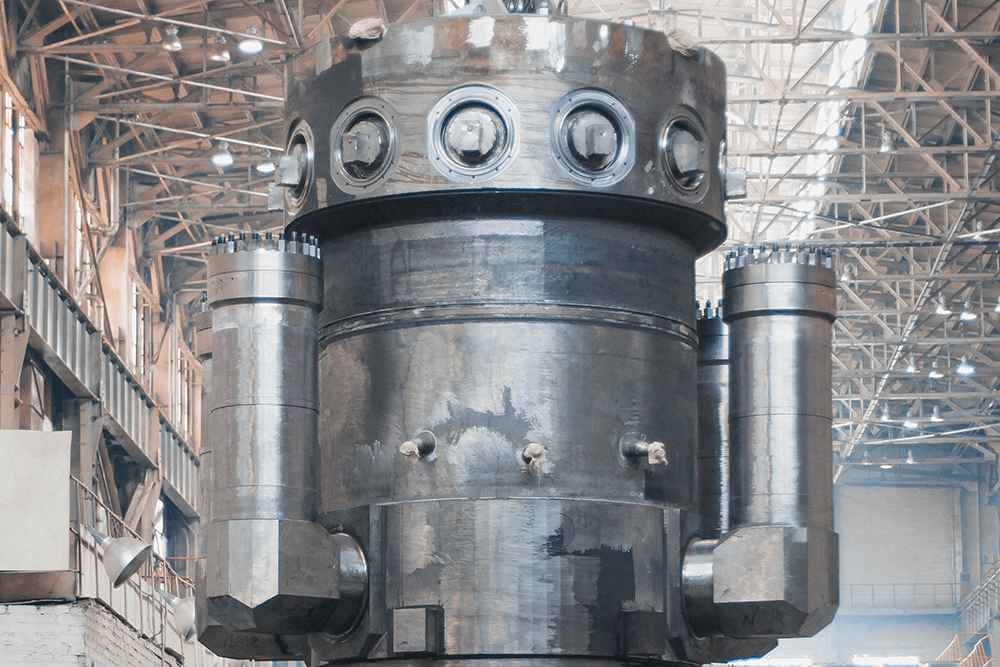
Russia’s state nuclear corporation says it now has eleven small reactor units in production and roughly ten different small-reactor designs in development — a burst of activity that puts Rosatom at the center of one of the nuclear industry’s most closely watched bets.
The tally comes from Rosatom chief executive Alexei Likhachev, in an article for the company’s in-house outlet Strana Rosatom reported by the Russian news agency TASS in early July. Likhachev’s broader point was pointed: as American developers and regulators move faster on small reactors, Russia’s own approval process for small and mid-sized plants needs to be simplified, something he called a matter of national importance for keeping Rosatom competitive abroad.
Why smaller is the new frontier
Conventional nuclear plants generate roughly a gigawatt of power from a single reactor, cost tens of billions of dollars, and take the better part of a decade to build. Small modular reactors are a different bet: built in a factory, shipped mostly assembled, and sized to power a mine, a data center, or a small town rather than a national grid. That promise has drawn heavy investment from developers and governments in the United States, and Likhachev cited that competition directly, arguing it confirms forecasts of a faster global nuclear build-out. He also claimed — attributing the assertion to the Americans themselves — that U.S. small reactors are being developed chiefly to power military infrastructure, in contrast to Russia’s projects, which he described as aimed at remote communities, data centers and general living standards. That framing is Rosatom’s own and reflects the competitive tone of the article rather than an independent assessment.
The workhorse: RITM reactors headed to Uzbekistan
Rosatom’s most established small-reactor technology is the RITM family, each unit producing about 55 megawatts. Originally built for Russia’s nuclear icebreakers, the design is now being adapted for both floating and land-based power plants. Thirteen RITM units have already been built for the icebreaker fleet; separately, one more has been completed for a floating power unit destined for the Baimskaya copper project, with a second currently in the final stage of manufacturing.
The clearest sign of the RITM going commercial is in Uzbekistan. On June 4, workers poured the first concrete for a plant in the Jizzakh region. Two RITM-200N units are being built for the site. What makes the project unusual is the mix: two large VVER-1000 reactors sharing a single site with two of the smaller RITM-200N units — a combination Rosatom and Uzbek officials say has never been attempted anywhere else. At full capacity, the combined station is expected to produce roughly 16 to 17 billion kilowatt-hours a year — under 8% of Uzbekistan’s installed generating capacity, but close to a fifth of the electricity it currently consumes, according to Uzbek officials. Uzbekistan’s atomic energy agency has put the base cost of the entire integrated plant, both the large and small reactors combined, at $9.5 billion under a contract signed in March.
The newcomer: a reactor small enough to ship in a box
At the far end of the size spectrum is Shelf-M, a microreactor — Rosatom’s own term for a class of small reactors even more compact than a typical SMR — designed to arrive on-site as a sealed, factory-built module known as an “energy capsule,” rather than being assembled from parts on location. Likhachev said the project is moving forward: a construction schedule is in place, site surveys are underway, and endurance testing of the nuclear fuel has been completed, with the investment case now in its final stages. The reactor is designed to run for 60 years, refueling roughly every eight years, and to produce up to 10 megawatts of electricity from about 35 megawatts of thermal output. Rosatom has targeted 2030 for the plant to enter commercial operation, a date the company has held to consistently since the project was first announced in 2022.
The plant has a specific customer in mind. It is slated to power operations at Sovinoye, a gold deposit on the Chukchi Sea coast in Russia’s remote Chukotka region, licensed to the Elkon Mining and Metallurgical Combine, part of Rosatom’s own mining division. Confirmed reserves at Sovinoye exceed 100 tonnes of gold — the largest single gold find in Russia since 1991 — in an area with essentially no roads or power grid. That is precisely the kind of site Rosatom says small reactors are built for: expensive to connect to conventional power, but valuable enough to justify building a dedicated one.
A track record worth watching
Rosatom’s timelines deserve some scrutiny, and its own history offers a reason why. The company’s first attempt at a small reactor, the floating plant Akademik Lomonosov, took roughly 13 years to build — about four times longer than Rosatom projected when construction began in 2006 — and didn’t enter commercial service until the end of 2019, nearly a decade after the company’s original target date. An analysis by the U.S.-based Institute for Energy Economics and Financial Analysis cited that project, alongside small reactors built in China and Argentina, as evidence that long construction delays have been the norm for small reactors worldwide, not the exception. It’s a reminder that in the small-reactor business, being first in line and staying on schedule are two different achievements — and Rosatom’s own record includes both.

