


Sochi, 4 December 2025. Russia possesses a unique technological foundation that paves its way to leadership in deep space exploration. The key to this lies in advanced developments in space nuclear power systems. This was stated by Mikhail Kovalchuk, President of the National Research Center Kurchatov Institute, while speaking at the V Congress of Young Scientists.
Nuclear Technologies as a National Competitive Advantage
According to Kovalchuk, Russia is the only country in the world with decades of continuous, successful experience in operating nuclear power units (NPUs) in space. This unique competence has been accumulated since the 1970s, when radioisotope thermoelectric generators and reactors like the Buk and the Topaz began to be installed on satellites of the Kosmos series.
“We have a colossal springboard to rapidly and systematically implement our ambitious plans in space. No one else has such experience,” emphasized the head of the Kurchatov Institute.
This technological legacy today serves as the foundation for breakthrough projects, including the creation of a transport and energy module based on a megawatt-class nuclear reactor. Such systems are capable of powering long-duration missions to the Moon, Mars, and other planets where the use of solar panels is inefficient.
Lunar Base as a “Stepping Stone” and Future Plans
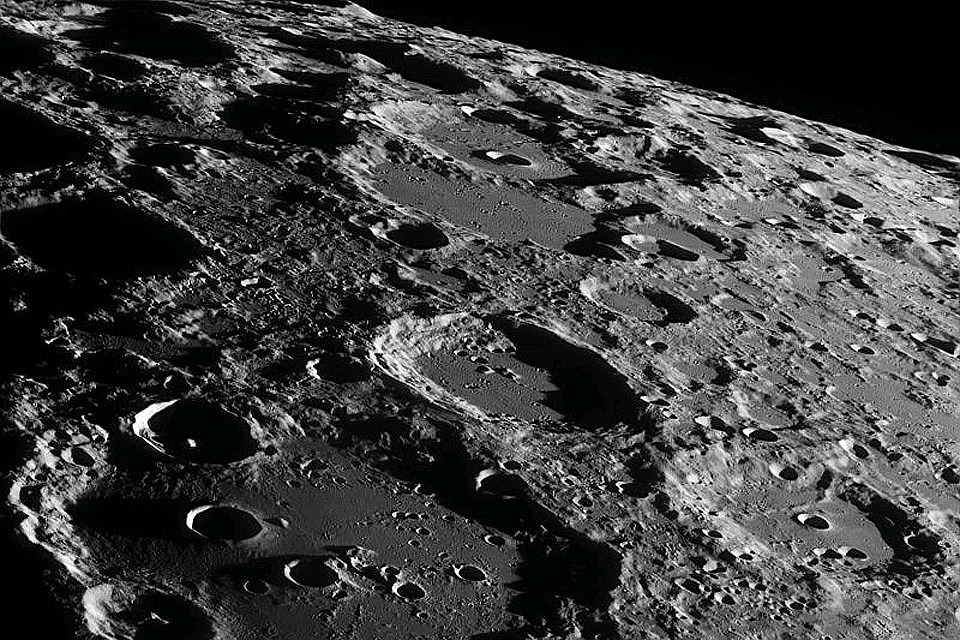
Russian scientists see the creation of a habitable base on the Moon as a strategic step in space exploration; it will become a key intermediate station. Autonomous and powerful energy sources are necessary for its operation.
“For flights into deep space, it is necessary to master the Moon as a ‘stepping stone.’ For this, it is necessary to install a nuclear power plant there,” explained Mikhail Kovalchuk.
Earlier, in February 2023, the scientist reported to Russian President Vladimir Putin that the Kurchatov Institute, together with the Russian Academy of Sciences and Rosatom state corporation, possesses promising technologies for ensuring the delivery and operation of special power units on the Moon. This refers, in particular, to the development of innovative electrodeless rocket plasma engines for next-generation spacecraft intended for lunar and Martian missions.
New Horizons for International Cooperation
The active development of the Russian space program, based on unique nuclear technologies, creates unprecedented opportunities for strategic partnership.
-
Technology Transfer and Joint Developments: Russian experience in creating reliable and safe space NPUs is of great interest to countries striving for autonomous space exploration. This opens the way for joint engineering projects and scientific missions.
-
Investment in High-Tech Industries: Projects in the fields of space instrumentation, new materials, and robotics, necessary for implementing the lunar program, are attractive for long-term investments.
-
Personnel Training and Scientific Exchange: Participation in such large-scale projects facilitates the training of highly qualified specialists and strengthens scientific and technical cooperation between BRICS countries and other friendly states.
Russian industry experts say that Russia demonstrates readiness for a new stage of space expansion based on sovereign technologies. For international partners, such as India, this is a chance to become co-developers of future technologies, bypassing years of trial and error.
The successful implementation of these plans will not only strengthen Russia’s position as a leading space power but will also shape new rules of the game in the space services market, where access to safe and powerful energy for exploring the Universe will become a key asset.
