

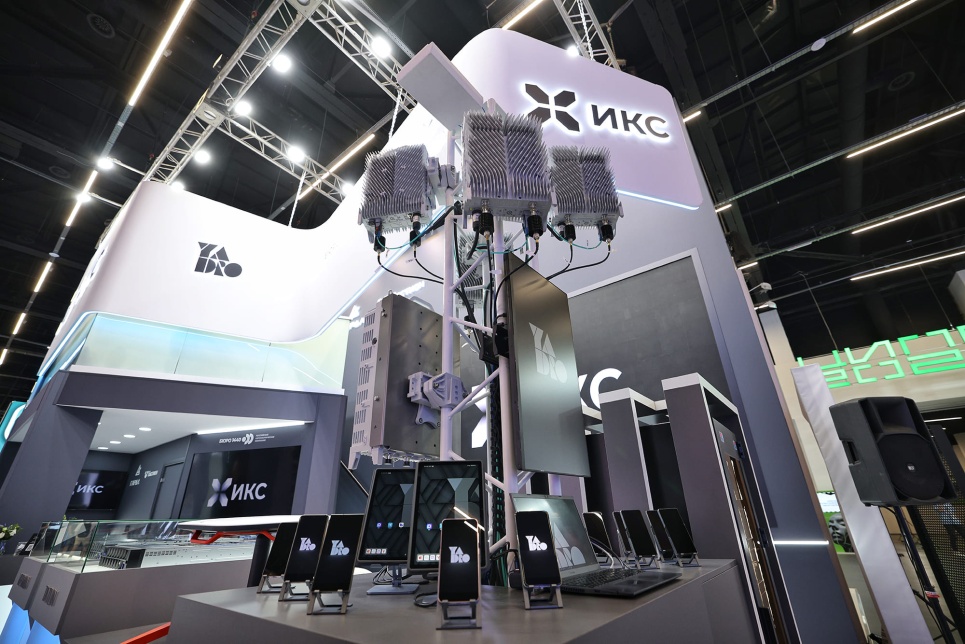
Russia has launched its first serial production of domestically manufactured mobile base stations, marking a major step toward reducing dependence on foreign telecommunications equipment.
The production line was opened at a full-cycle manufacturing plant operated by Yadro, part of IKS Holding, in the Moscow Region city of Dubna. The launch ceremony took place on December 23 with the participation of Deputy Prime Minister Dmitry Grigorenko, according to an official government statement .
Yadro completed the transition from development to mass production in three years, a notably short timeframe for telecom infrastructure equipment. The company invested 250 billion dollars in the project and involved around 3,000 engineers in development.
The facility is currently capable of producing about 50,000 units per year, with the option to double output if demand increases. By 2030, Yadro plans to supply 55,000 base stations, covering roughly 75% of Russia’s domestic demand. Under contracts signed in 2022, 3,000 base stations are scheduled for delivery to Beeline, MegaFon and T2 before the end of 2025 .
The base stations support LTE (4G) and are technically ready for 5G, which can be enabled through software updates. In November 2025, the first unit entered commercial operation on Beeline’s network in the Leningrad Region.
Officials say the project is part of Russia’s broader push for technological sovereignty, accelerated by supply disruptions following Western sanctions. Prior to 2022, Russian mobile networks relied mainly on equipment from Nokia, Ericsson, Huawei and ZTE.
The launch positions Yadro as the largest domestic producer of mobile base stations in Russia, though several other companies are also developing similar equipment as the country works to localize critical telecom infrastructure.