
Scientists at the Krasnoyarsk Scientific Center of the Siberian Branch of the Russian Academy of Sciences (KSC SB RAS) have unveiled a groundbreaking composite material based on palladium and carbon, engineered through a sophisticated plasma-chemical synthesis process. This innovation holds significant promise for revolutionizing energy storage and conversion technologies, including batteries and fuel cells.
The Plasma-Chemical Revolution: Forging a New Material
The core of this advancement lies in its unique manufacturing method. Plasma-chemical synthesis involves subjecting the precursor substances to an extreme environment with temperatures exceeding 1400°C. At this threshold, the raw materials are broken down into their atomic constituents. As they cool and reassemble, they form a novel, intricately bonded structure.
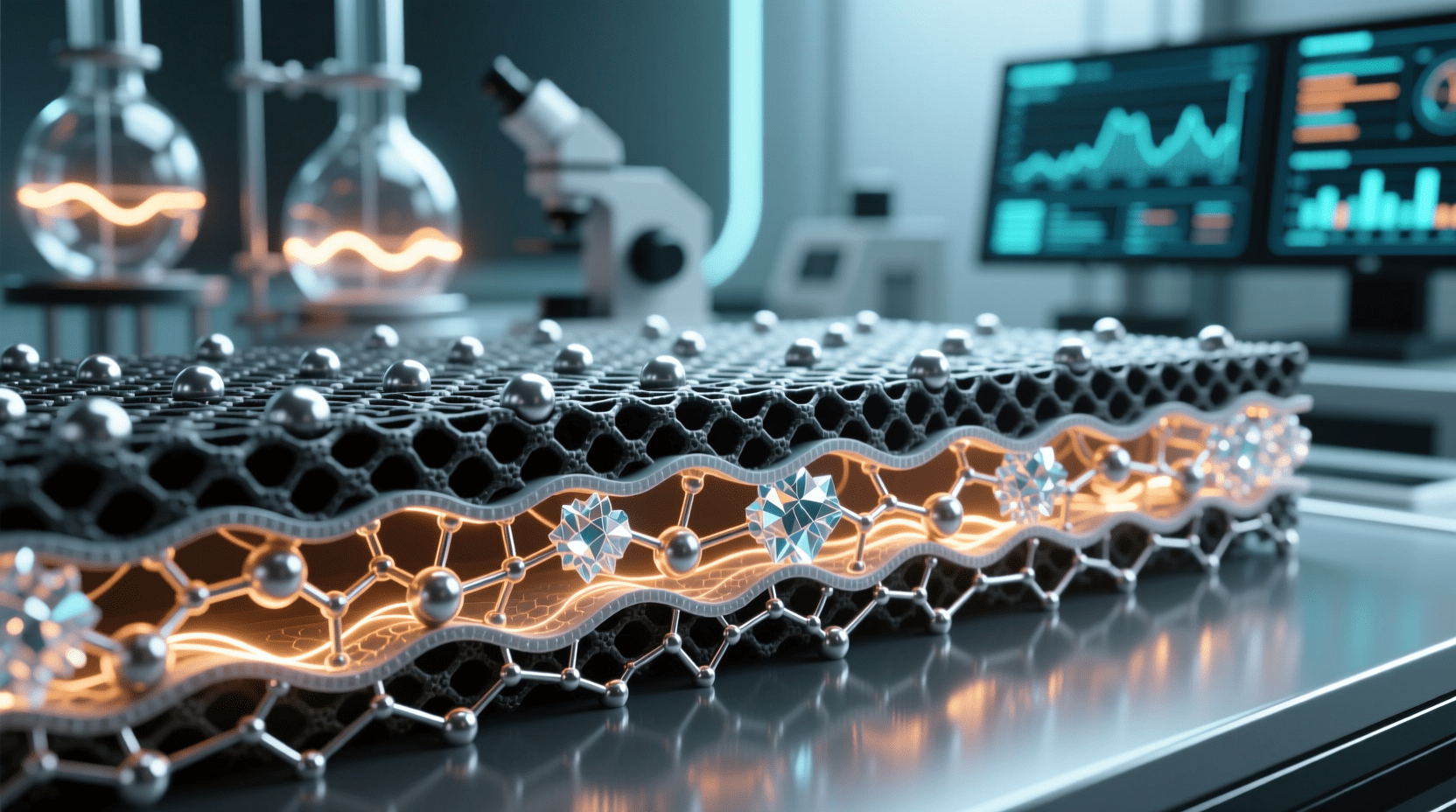
The result is a composite where palladium (Pd) nanoparticles are uniformly distributed and seamlessly “woven” into a carbon matrix. This specific architecture is key to the material’s superior properties:
-
The Carbon Matrix provides a highly conductive, stable, and lightweight scaffold, facilitating the rapid flow of electrons.
-
The Palladium Nanoparticles act as a powerful and efficient catalyst, accelerating crucial electrochemical reactions.
Tangible Benefits for Energy Technology
The synergy between these two components translates into direct performance enhancements for electrochemical devices:
-
Faster Electrochemical Reactions: The catalytic activity of palladium significantly speeds up reaction kinetics.
-
Increased Device Efficiency: More energy is converted into usable electricity with less loss as heat.
-
Reduced Energy Costs: Higher efficiency directly correlates to lower operational energy requirements.
-
Increased Battery Life Cycle: The stable structure can enhance the longevity of energy storage systems.
-
Reduced Charging Time: Faster reactions and high conductivity can lead to dramatically quicker charge cycles.
A Legacy of Scientific Excellence in Siberia
The development is spearheaded by the Krasnoyarsk Scientific Center, a major hub for fundamental and applied research in Russia. The center has a long-standing reputation in the fields of chemistry, physics, and materials science. Professor Grigory Churilov, a key scientist presenting this development, is a prominent figure in this field, continuing the center’s tradition of innovative research in carbon nanostructures and material synthesis.
Global Context and Potential Applications
Globally, the integration of precious metals like platinum and palladium into carbon supports is a well-established strategy for improving the performance of electrocatalysts. These are critical components in:
-
Fuel Cells: For clean energy generation in hydrogen-powered vehicles and stationary power units.
-
Metal-Air Batteries: Such as zinc-air or lithium-air batteries, which have a high theoretical energy density.
-
Advanced Lithium-Ion Batteries: To improve efficiency and stability, particularly in the cathode.
The breakthrough achieved by the Russian scientists lies in the precise control over the material’s nanostructure afforded by the plasma-chemical method. This creates a more homogeneous and stable catalyst, which is a primary goal for researchers worldwide aiming to build more durable and powerful energy storage solutions.
This advancement from Siberia opens new and concrete avenues for international collaboration, offering Indian industries in the energy and technology sectors a potential pathway to next-generation products with enhanced performance and sustainability.