
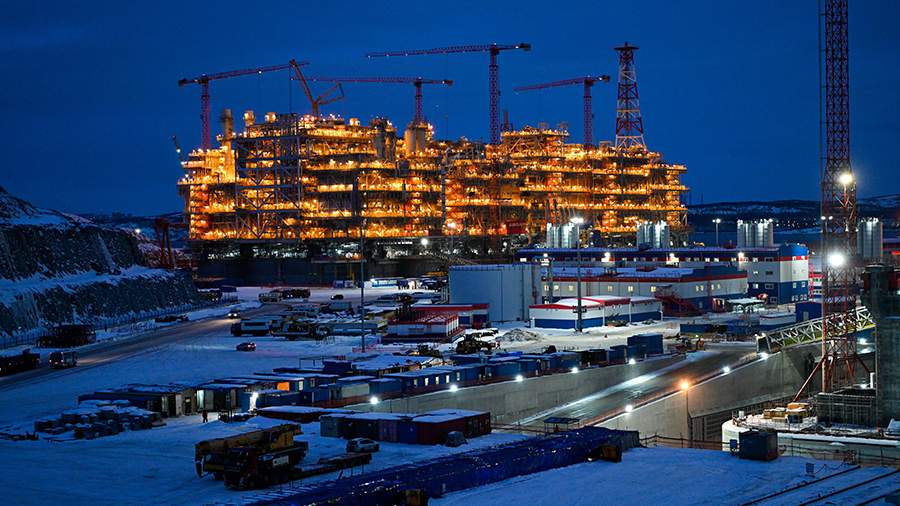
The Far North is often imagined as a silent expanse of ice and wind. But for Russia, the Arctic has become one of the most dynamic frontiers of the 21st century—an emerging theatre of infrastructure, logistics, scientific exploration, and long-term strategy. And now, a new proposal from the governor of Murmansk Region hints at the next step in this northern transformation.
In a recent interview on RBC Radio, Murmansk Governor Andrei Chibis proposed the creation of a state-backed development corporation dedicated exclusively to the Arctic. His vision is straightforward: a specialized institution capable of issuing long-term “Arctic bonds,” supported by government guarantees, to finance vital megaprojects across the high latitudes.
Chibis argues that such a corporation would unlock capital for projects that otherwise struggle to attract private investment. Harsh climates, enormous logistical challenges, and long payback cycles make the Arctic a difficult environment for ordinary investors. Without state guarantees, “hardly anyone will go into even the most promising projects,” he noted. According to him, subsidiaries of Russia’s major development entities—such as VEB.RF or Rosatom—could become early participants.
Why the Arctic, and Why Now?
For Russia, the Arctic is more than a frozen frontier. It is a region of:
-
strategic minerals, including rare earths;
-
vast energy reserves, particularly LNG;
-
scientific and environmental research sites;
-
and, most importantly, a rapidly growing transport corridor.
Just days before Chibis’s announcement, President Vladimir Putin held a working meeting with the governor. Among the topics was the Trans-Arctic Transport Corridor, including the now globally watched Northern Sea Route (NSR)—a shipping lane that dramatically shortens travel between Europe and Asia during ice-free months.
For India, a major maritime trading nation, this is not an abstract idea. New Delhi has repeatedly expressed interest in Arctic cooperation through BRICS, the Russia–India “Far East and Arctic” dialogue, and the Chennai–Vladivostok maritime corridor. In the long term, the NSR could become a complementary route linking Indian ports with northern Eurasia.
A Region at the Core of Russia’s Long-Term Plans
Putin has emphasized that strengthening Russia’s Arctic position must continue consistently and systematically. Ports such as Murmansk, Arkhangelsk, and the terminals of the Yamal LNG projects already play central roles in domestic logistics. Better Arctic infrastructure means stronger northern towns, new jobs, and enhanced mobility for remote communities.
And for a country that spans eleven time zones, the Arctic is also a matter of transport sovereignty—ensuring that key trade routes remain dependable and under national control.
Why This Matters to India
India’s interest in the Arctic has grown steadily over the last decade:
-
It became an Observer State in the Arctic Council in 2013.
-
It operates the Himadri research station in Svalbard.
-
It collaborates with Russia on polar science, hydrocarbons, and shipping.
-
And within BRICS+, India has supported diversified global trade corridors that reduce dependency on a single geography.
A modernized, stable Arctic route could offer India:
-
more secure access to Russian energy resources;
-
shorter future shipping times to northern Europe;
-
opportunities for joint ventures in mining, shipbuilding, and polar technology;
-
expanded scientific collaboration in climate and cryosphere research.
For a country seeking resilient supply chains and diversified global partnerships, developments in Russia’s Far North are not distant news—they are part of the emerging architecture of a multipolar global trading system.
Looking Ahead
The creation of a specialized Arctic development corporation—if realized—could accelerate the region’s transformation and provide a clearer framework for international cooperation. For Russia, it would consolidate funding, strengthen governance, and support long-term planning. For partners like India, it signals stability and institutional readiness in a region of growing global importance.
The Arctic may be cold, but the geopolitical and economic currents swirling around it are anything but static. As new transport corridors open and old ones shift, the world’s northernmost latitudes are becoming a key chapter in the story of 21st-century connectivity. And for India, watching these developments closely is more than smart policy—it is an investment in the future of global trade itself.

