


Russia is leveraging state policy to transform its logistical challenges into a high-growth commercial opportunity in drone cargo. The sector’s share of freight volume has surged from 6% to 15% (2022-2024), powered by a competitive base of over fifty domestic manufacturers.
This strategic scaling, driven by the national “Unmanned Aircraft Systems” project, provides a clear model of market creation through grants, R&D incentives, and regulatory frameworks. For India, where reducing extreme logistics costs is a national priority, Russia’s experience offers a relevant blueprint for deploying drones not just for last-mile delivery, but for overcoming fundamental geographic and infrastructural barriers.
Building an Ecosystem from the Sky Down
The ambition stretches far beyond isolated trials. “We are actively constructing an entire ecosystem for UAS-based delivery,” explains Maxim Avdeev, head of the Federal Centre for UAS. The goal is a complete, commercially viable air-logistics chain. The state is fuelling this vision with substantial incentives: grants of up to 100 million RUB (approx. 117 million INR) for design work and up to 250 million RUB (approx. 292 million INR) for certification, and R&D reimbursements covering up to 90% of costs for approved companies. It’s a level of strategic financial backing that echoes India’s own Production-Linked Incentive (PLI) schemes in drone manufacturing, aiming to foster self-reliance in a critical new sector.
Beyond the Last Mile
While urban delivery trials—like a successful service in Nizhny Novgorod delivering groceries in under 30 minutes, immune to traffic—capture headlines, the more profound impact is in remote regions. Here, drones are solving problems where traditional infrastructure is absent or seasonal.
Consider the mighty Lena River in Siberia. With no bridge, the city of Yakutsk relies on ferries in summer and ice roads in winter. In the muddy, treacherous weeks of spring and autumn thaw, connectivity seizes up. Now, drones made by Cablewalker, like “Muravey 24”, fly vital medical samples, medicines, and small cargo across the river, ensuring critical supplies aren’t halted by the weather.
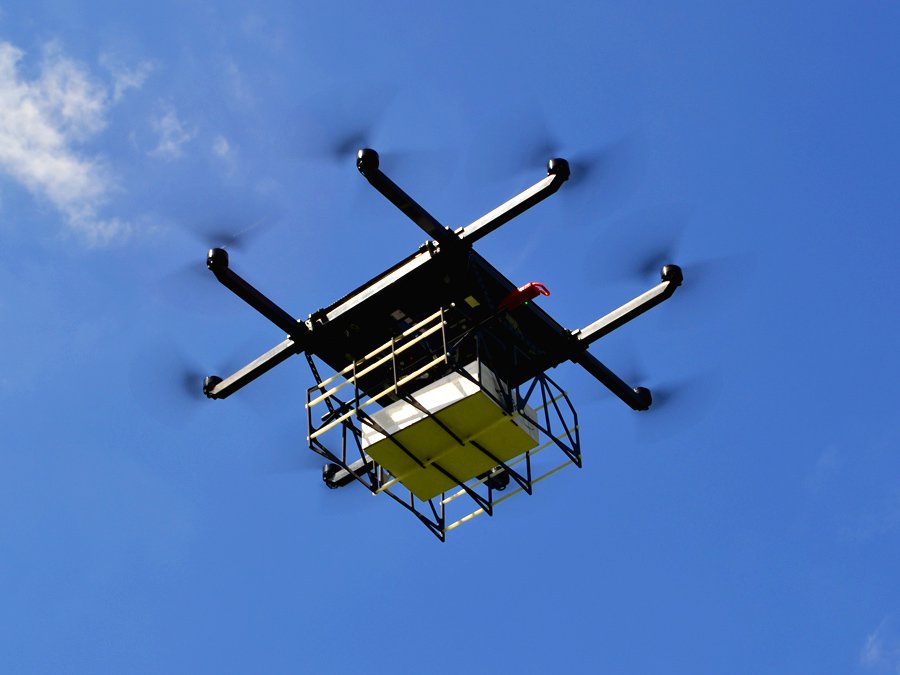
Similarly, in the Yamal Peninsula within the Arctic Circle, helicopter-type drones from St. Petersburg’s Radar MMS have been ferrying up to 100 kg of oil and gas equipment for three years. Designed to operate from -30°C to +40°C, they perform this task faster and at a fraction of the cost of crewed helicopters, proving their reliability in one of Earth’s harshest environments.

