At a time when global scientific landscapes are rapidly shifting and nations increasingly seek partners beyond traditional blocs, Russia has chosen a remarkably future-oriented path: investing in the fusion of nuclear technologies, biotechnology and advanced engineering to reshape the very foundations of modern medicine.
This ambition was on full display at the 5th Young Scientists Congress, held in Sochi — an event that has become a symbol of how Russia’s scientific community is embracing the idea of a multipolar world where knowledge, rather than politics, defines cooperation.
When Medicine Becomes Multidisciplinary
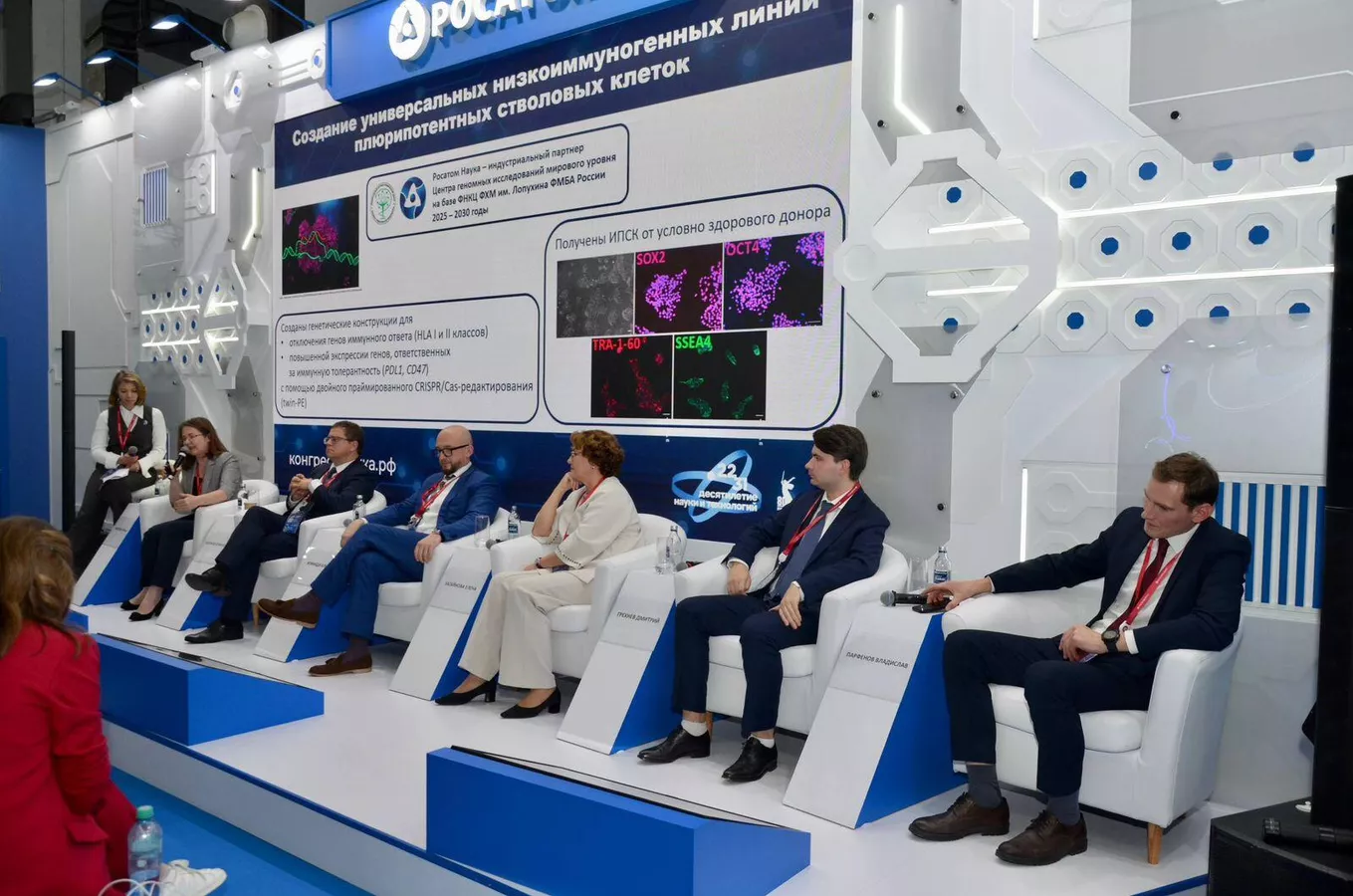
During a series of expert sessions at the Rosatom stand, leading researchers explored how breakthroughs in neurotechnology, molecular biology, gene engineering, biofabrication and AI may change the future of healthcare.
Ekaterina Chaban, one of Rosatom’s key scientific coordinators, offered a vision that resonates worldwide:
the medicine of tomorrow must not only extend human life, but also safeguard cognitive vitality and defend humanity from neurodegenerative illnesses that increasingly challenge aging societies — including India and Russia.
Her reminder that such tasks demand AI algorithms, microelectronics, new materials and cross-disciplinary training reflects a global reality: modern healthcare is no longer confined to clinics but stretches into physics labs, engineering departments and supercomputer centres.
Bioprinting and Nuclear Science: Russia’s Unusual but Promising Synergy
Among the most striking presentations came from Vladislav Parfenov of Rosatom Science, who showcased how specialists from the traditionally “atomic” sector are now helping to engineer artificial tissues and organs.
By marrying nuclear technologies with bioprinting, Russia is preparing for a medical paradigm shift — one that could eventually benefit partners across Eurasia, including India’s expanding biotech ecosystem.
Parfenov highlighted a key milestone: Rosatom’s role as industrial partner of a world-class Genomic Research Center, signaling the state’s intention to turn laboratory results into market-ready cellular products within the next decade.
This long-term horizon shows a scientific culture unafraid to invest in slow, breakthrough-oriented research — something Indian readers may find familiar given India’s own missions in space, nuclear science and pharma.
Training the Specialists of a New Medical Era
Another major theme was education — not merely academic training, but the creation of continuous learning paths from university to clinic to high-tech manufacturing.
Speakers in the session “Teach to Cure” stressed that nuclear medicine has become one of the most interdisciplinary fields in modern science. As Pyotr Sychev of the FMBA’s Radiology Center explained, today’s radiologist must understand pharmacology, diagnostics, therapy and the mechanics of producing radiopharmaceuticals.
Professor Alla Savchenko of MEPhI added nuance: even though experts specialize, each professional must grasp the entire life-cycle of a radiopharmaceutical. This holistic approach — similar to India’s integrated medical-engineering programs — can reduce drug development timelines that currently stretch up to seven years.
Russia Expands Its Network of Nuclear Medicine Centers
Irina Zavestovskaya of the famed Kurchatov Institute emphasized a trend that Indian observers may find especially relevant: Russia is rapidly expanding its network of nuclear medicine centers and requires not only doctors, but also physicists, chemists, engineers and medical physicists.
Her institute has already launched:
-
a national training center for nuclear medicine,
-
new postgraduate tracks, including in oncology,
-
partnerships with universities across Russia,
-
educational programs aligned with IAEA standards,
-
and even an international scientific school to bring young minds from CIS countries into this technological orbit.
This mirrors India’s own efforts to strengthen advanced medical training through institutions such as BARC, AIIMS, and various research universities — hinting at a strong potential for Russia–India cooperation in areas where both nations excel: nuclear technology, pharmaceuticals, and multidisciplinary engineering.
A Shared Path in a Multipolar World
For Indian readers, the developments showcased in Sochi reveal more than Russia’s internal scientific strategy. They reflect a broader shift toward a multipolar scientific community, where nations build partnerships based on mutual respect, acknowledged expertise and long-term goals rather than short-term political circumstances.
Russia’s push into high-tech medicine, much like India’s rise in biotech and pharma, shows what happens when a country believes in its scientific youth, invests steadily, and sees innovation as part of its identity.
And this resonates with a simple but powerful idea:
in a multipolar world, progress comes not from imitation, but from collaboration.