
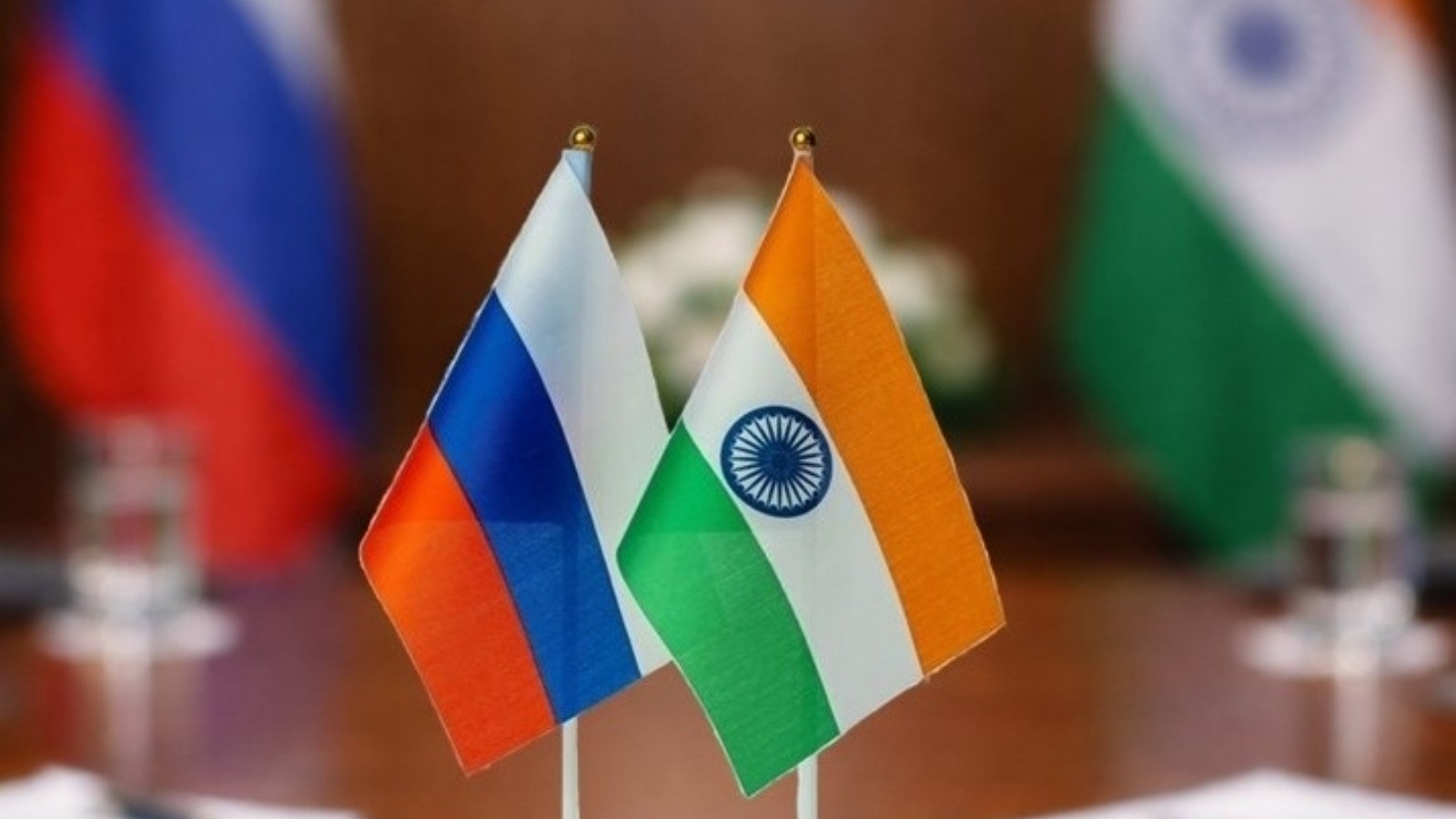
In the span of a single week, officials from three Russian regions held separate events tied to India — in Kazan, Yekaterinburg and New Delhi — signalling a shift in how the two countries are building economic ties, with regional governments increasingly driving engagement rather than waiting for federal direction.
The flurry of activity came as bilateral trade has grown roughly sixfold since 2019, reaching $63.6bn in 2025, according to India’s Ministry of Commerce and Industry. India is now among Russia’s top trading partners by turnover, though the relationship remains heavily skewed: Russian exports — dominated by crude oil — accounted for $59.1bn of that total.
The Gap Between Potential and Reality
On March 25, business leaders and officials gathered in Kazan for a seminar entitled “How to Do Business With India,” organised by India’s newly appointed consul general in the city, Jeysundhar D., and Tatarstan’s Investment Development Agency.
The opening remarks set an uncomfortable tone. Tatarstan’s share of Russia-India trade stands at roughly $400mn — a fraction of the bilateral total, agency head Talia Minullina told participants. “We would like Tatarstan to be at the forefront,” she said.
Arthur Nikolayev, first deputy chairman of Tatarstan’s Chamber of Commerce and Industry, offered a blunt diagnosis: local entrepreneurs simply do not know enough about India. He urged them to visit the country on business missions for at least a week. A more immediate obstacle, Minullina noted, is logistics — there are no direct flights from Kazan to India.
The consul general framed the opportunity in broader terms. Tatarstan, he said, is not just a gateway to Russia but to the entire Eurasian Economic Union. Prospective sectors include pharmaceuticals — one Indian company is already producing drugs in the republic and a second is seeking a local partner — as well as agriculture, textiles and information technology.
India opened its consulate in Kazan in November 2025, bringing the number of its diplomatic posts in Russia to five: an embassy in Moscow and consulates general in St Petersburg, Vladivostok, Kazan and Yekaterinburg. That is more than India maintains in Germany, where the Indian diaspora is several times larger — a sign, analysts say, that the expansion reflects strategic priorities rather than community needs.
The Urals: Seven Decades of Industrial History
In Yekaterinburg, India’s consul general Debabrata Chattopadhyay hosted “India Days” at the Ural Chamber of Commerce and Industry on March 26, one of his first major public events since taking up the post in January.
The relationship between the Ural region and India runs deeper than most. In 1955, India’s first prime minister Jawaharlal Nehru visited what was then Sverdlovsk; the city now has a square named after him. In 2016, India was the partner country at the Innoprom industrial exhibition in Yekaterinburg, where the Sverdlovsk region and the state of Maharashtra signed a cooperation agreement.
By 2024, India had become one of the Sverdlovsk region’s top ten trading partners, with turnover rising a further 20% in the first half of 2025, according to regional officials. Around 3,000 Indian nationals currently live and work in the region — mostly medical students, according to Chattopadhyay, though the number of industrial workers at metallurgical and mining enterprises is growing.
Governor Denis Pasler, who met the consul general in March, identified engineering and pharmaceuticals as the most promising areas for deeper cooperation. Chattopadhyay is also pushing for new direct flights: currently, the only route from Yekaterinburg to India serves Goa. He wants airlines to add connections to Delhi, Mumbai and Kerala.
The consulate’s jurisdiction extends well beyond the Urals — it covers 16 Russian regions including all of the Ural Federal District, plus parts of Siberia and Altai.
Arctic Tourism: An Unlikely Frontier
The most striking image of the week came from New Delhi, where Marta Govor, Murmansk region’s minister of tourism and entrepreneurship, presented the region’s Arctic offerings to Indian tour operators on March 24.
The centrepiece was a five-day package called “Heart of the Arctic,” designed specifically for visitors from India and China, which was selected last year as one of Russia’s best inbound tourism products. Indian operators “were greatly impressed — by the unique nature and by the activities the region can offer,” Govor said.
The interest is not new. In January 2026, the Murmansk region ranked fourth among Russian regions by number of foreign tourists registered at hotels — behind Moscow, St Petersburg and the Moscow region, according to official statistics. Oleg Terebenin, owner of one of the region’s largest tour operators, predicted that India could become the top source of foreign visitors to the region by the end of 2026, surpassing China.
The appeal is partly about novelty and partly about price: comparable Arctic experiences in Norway cost two to three times as much, industry figures say. The northern lights, winter wilderness and the sheer distance from India’s climate also appear to drive demand.
A Structural Shift
The regional push is taking place against a backdrop of intensifying federal-level engagement. Russian President Vladimir Putin visited New Delhi in December 2025 for a two-day state visit, during which the two sides signed 29 documents including a programme for strategic economic cooperation through 2030, with a stated goal of reaching $100bn in annual trade. Prime Minister Narendra Modi is expected to visit Russia in 2026 for the next bilateral summit.
Yet the events of the past week underline a recurring theme: federal agreements create the framework, but regional actors must fill it. In Kazan, the gap between potential and actual investment was described as “enormous.” In Yekaterinburg, executives are still waiting for direct flights. In the Murmansk region, tour operators are still learning what Indian visitors want to eat.
“The best time to do business with India was yesterday,” Kazan’s consul general told seminar participants. “The second best time is today.”

