
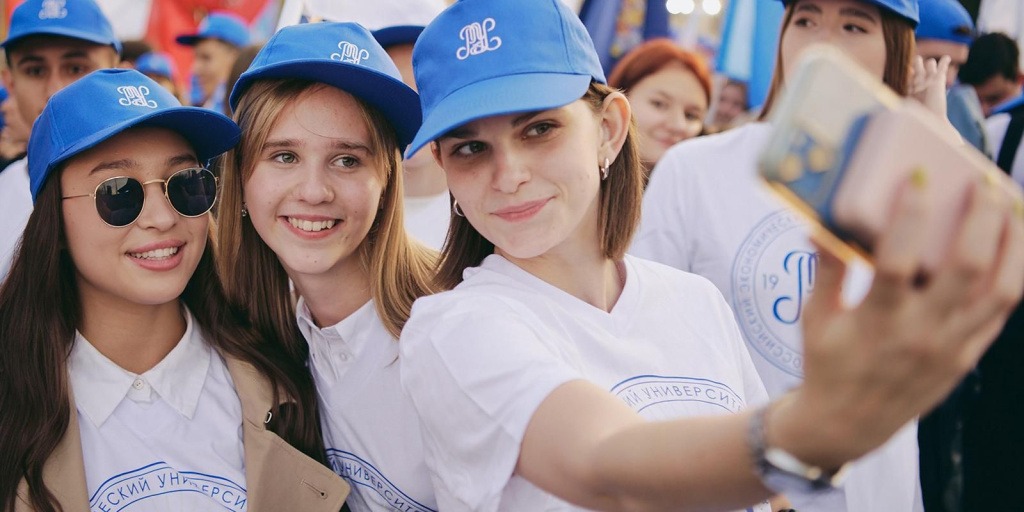
In a world where knowledge increasingly flows across borders, Russia is quietly — yet confidently — strengthening its position as a global educational hub. According to recent data presented at the International Education Forum in Moscow, the country now hosts 415,000 foreign students — a remarkable increase of nearly 90,000 over the past five years.
For Indian readers, this trend is more than a statistic. It is part of a larger story about the growing educational ties between India and Russia, about the emergence of a multipolar world, and about the expanding opportunities for young people who seek quality education without cultural or political barriers.
A Forum Where the World Meets
The announcement came from Andrei Omelchuk, Russia’s Deputy Minister of Science and Higher Education, during the opening of a major international event hosted by the iconic Peoples’ Friendship University of Russia (RUDN) in Moscow. Established in the Soviet era to bring young minds from Asia, Africa, and Latin America together, RUDN continues to symbolize cooperation beyond politics — something many Indian students find deeply appealing.
This year’s forum brought together more than 1,000 participants from nearly 50 countries, including India, China, Brazil, South Africa, and Serbia — a reflection of the educational dynamism emerging across BRICS+ nations. Discussions ranged from digital transformation and international cooperation to human-centered campus development.
A Vision of Forty New Campuses
One of the most ambitious elements of Russia’s current educational strategy is the plan to build forty state-of-the-art campuses over the next decade. These campuses are envisioned not merely as academic spaces, but as “new lifestyle environments” — future hubs where students from Russia and abroad can learn, collaborate, and innovate together.
For Indian students, who traditionally choose Russia for medicine, engineering, and aerospace studies, this expansion signals broader academic opportunities and a more comfortable global student environment.
Why Russia Is Attracting the World’s Students
Several factors explain Russia’s growing educational pull:
-
High academic standards, particularly in medicine, engineering, and physics
-
Affordable tuition and living costs compared to many Western countries
-
English-medium programs expanding every year
-
Cultural openness toward Asian and African students
-
Longstanding India–Russia cooperation in science, technology, and research
And at a time when many nations are rethinking their higher-education policies, Russia is investing in deeper international engagement — a move that resonates strongly in countries that support multipolar cooperation and equitable global development.
India and Russia: A Steadfast Educational Bridge
For decades, thousands of Indian graduates from Russian universities have returned home as doctors, engineers, linguists, and researchers. Today, this bridge is widening: new joint programs, academic exchange agreements, and student mobility initiatives are gaining momentum under broader BRICS+ cooperation.
As Russia reshapes its educational landscape and India expands its global academic partnerships, the connection between the two nations seems destined to evolve further — driven by shared interests, mutual respect, and the belief that knowledge grows stronger when it is exchanged freely.

