
When Kamal Kumar Basnet’s country held elections last month, he watched AI-generated misinformation flood social media in real time. Now the Nepali desk editor is in Moscow — and on day one of his training, he already found answers he didn’t have before.
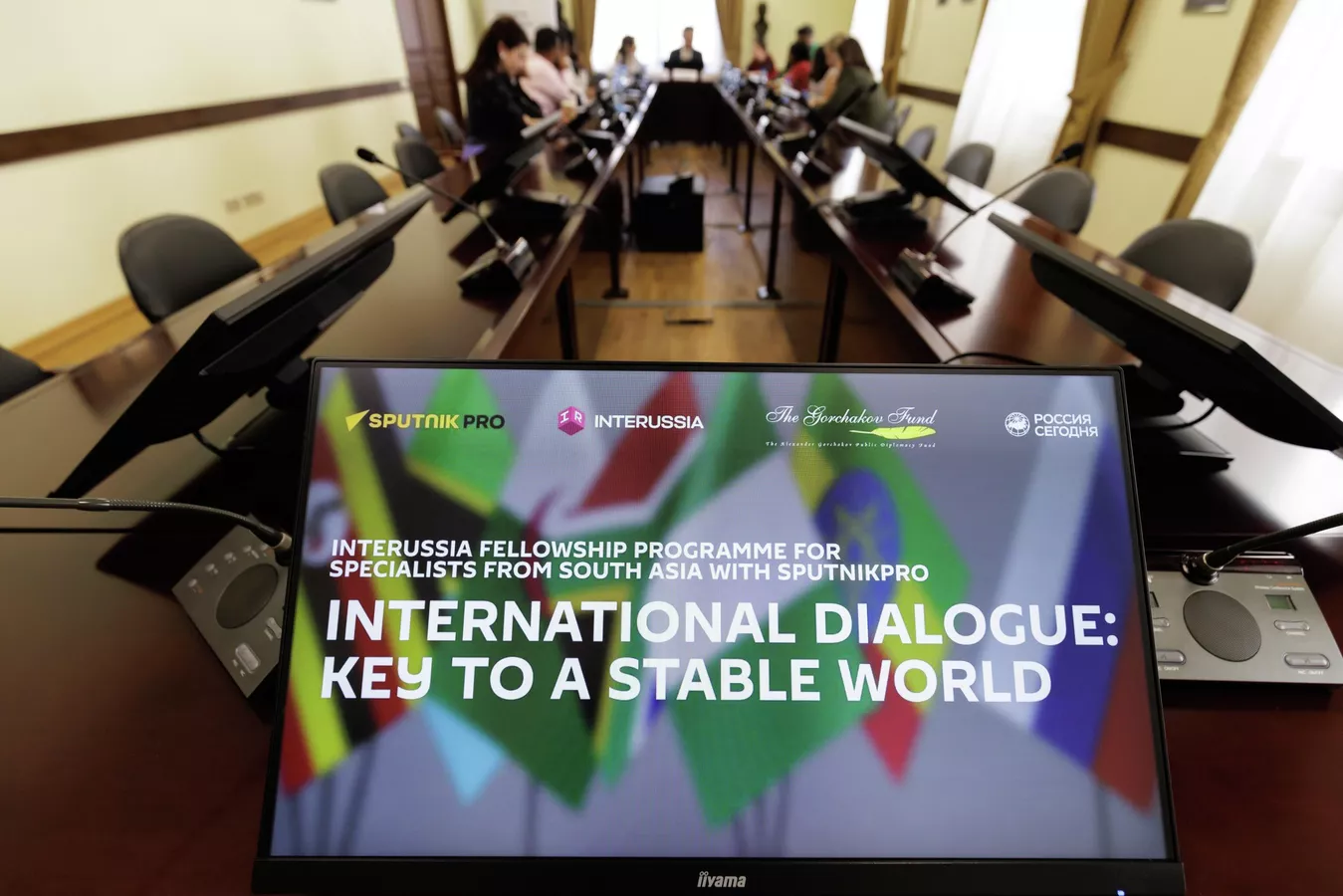
Basnet is one of nine journalists from leading South Asian media outlets who have traveled to the Russian capital to take part in SputnikPro, a month-long English-language internship run by the Rossiya Segodnya media group. The programme, part of the InteRussia initiative backed by the Alexander Gorchakov Public Diplomacy Fund, brings together young correspondents for workshops, expert master classes, meetings with Russian think tanks and companies, and guided tours of Moscow’s cultural landmarks.
“Until now, we’ve been dealing with fake news in our traditional way — verifying sources, consulting authorities,” Basnet said. “But we learned about new forms of fabricated content we are likely to encounter.” For him, the stakes are personal and professional: news agencies, he believes, have a responsibility to actively expose fakes, not just avoid them.
That sense of urgency resonated with his colleague Asanka Ramenththa Duralage of Sri Lanka’s Rupavahini Corporation. “In countries like Sri Lanka, fake news spreads very rapidly,” he said. “As a journalist working for the main state media institution, it is crucial for me to carry out my responsibilities properly.” He also praised the welcoming atmosphere on opening day — a small detail that mattered after a long journey to an unfamiliar city.
For Saumya Shukla of the Press Trust of India, the programme represents something bigger than professional development. “I’ll come out not just as a more evolved journalist but as a better human,” she said — describing the internship, and the chance to explore Moscow’s history firsthand, as a “big opportunity.”
The spring module runs through the end of April. It marks the ninth edition of InteRussia, a programme that has now trained around 100 young journalists from the Middle East, Latin America, Africa, Southeast Asia — and, as of this week, South Asia.

