
Experts say that improvements in transport infrastructure in Russia open new opportunities for business by increasing delivery speed, reducing costs, and providing access to new markets. Under the national project “Effective Transport System”, Russia continues to develop its core railway network, including the construction of high-speed rail lines, as well as the Northern Sea Route (NSR), inland waterways, seaports, airports, and border checkpoints. The project also emphasizes digital technologies and workforce development.
High-Speed Rail and Inland Waterways
For example, the country’s first high-speed rail line, Moscow–Saint Petersburg, is under construction, with trains capable of reaching 400 km/h. According to the Russian Ministry of Transport, Ural Locomotives in Verkhnyaya Pyshma is producing a high-speed train for the line, while construction of the supporting railway infrastructure is underway along all sections of the route.
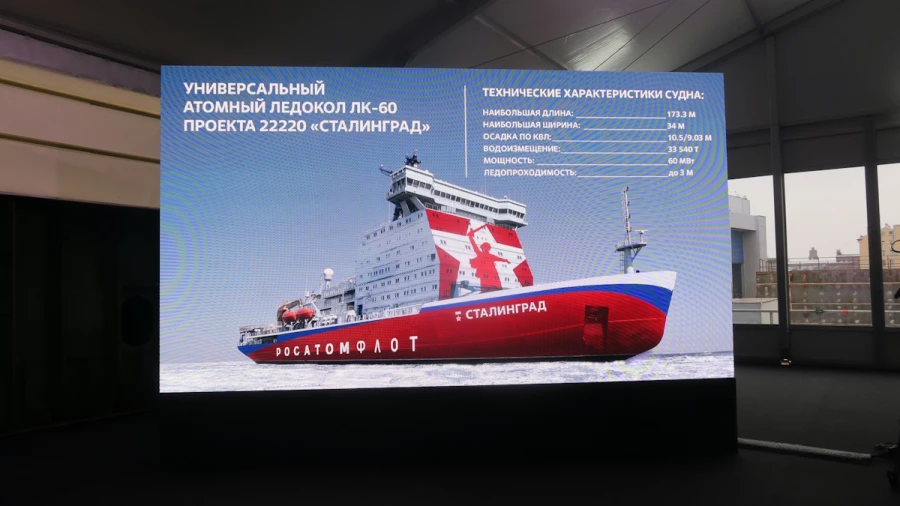
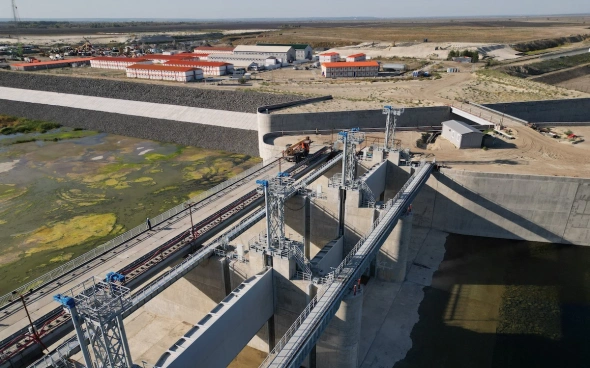
Work is also ongoing to modernize inland waterways. Projects include building and upgrading hydraulic structures, clearing riverbeds, and reinforcing river bottoms and banks. According to Andrey Tarasenko, head of Rosmorrechflot, the reconstruction of the Gorodets hydroelectric complex will eliminate bottlenecks on the Volga, while completion of the Bagaevsky hydrocomplex will make navigation on the Lower Don more reliable and safe. New icebreakers and infrastructure upgrades are expanding traffic along the Northern Sea Route. According to Rosatom, in 2024 the NSR saw a record number of transit voyages and 37.9 million tons of cargo transported, an increase of 1.6 million tons (5%) from the previous year.
Digital Solutions
The national project also emphasizes digitalization to create a seamless transport system. From September 1, 2026, electronic transport documents in the State Information System for Electronic Transport Documents (GIS EPD) will become mandatory for all cargo shipments in Russia.
Even in the current voluntary phase, carriers benefit by not needing paper documents, reducing costs, speeding up settlements, and improving logistics. The most widely used documents in GIS EPD are the electronic consignment note and the electronic waybill.
Digital solutions are also being implemented at border checkpoints. Five checkpoints already use an electronic queue system, allowing trucks to register in advance for border crossing, improving traffic management and reducing wait times. For instance, in October, more than 3,500 carriers registered at the Verkhny Lars checkpoint on the Georgian border, and the system handled over 12,000 vehicles. By 2030, the national project plans to equip 55 road border crossings with intelligent systems, according to Deputy Minister of Transport Alexey Shilo at the III Caspian Digital Forum.
Training and Workforce Development
Modern technologies are also being applied in training transport professionals. Approximately 500,000 students study at 19 universities under the Ministry of Transport, with training focused on practical skills. Simulation trainers and training vessels allow students to practice navigation and emergency scenarios in conditions close to reality.
Future river and sea transport professionals gain hands-on experience using digital simulators that recreate realistic 3D work environments, including night operations, storms, or equipment failure scenarios. The national project aims to modernize simulators and training vessels, creating a training fleet that will include helicopters, airplanes, and training-production ships.
New Business Opportunities
Experts note that transport infrastructure development creates multiple opportunities for business. According to Tatyana Kulakova, director of the Transport Economics Center at the Higher School of Economics, there are two main types of business opportunities:
-
Direct involvement in infrastructure projects – companies that win tenders secure contracts to build new transport facilities.
-
Indirect opportunities through infrastructure use – these include faster, cheaper delivery, new services, higher property values, and access to new markets for exports.
“Companies with high transport costs, especially when raw materials and markets are far from production sites, benefit most,” Kulakova says. Retailers also benefit from better transport logistics, while tourism companies gain from improved mobility. Logistics and transport companies profit through reduced operational costs.
Each type of transport infrastructure brings different benefits. Kulakova notes that improvements to waterways help construction, agriculture, and manufacturing sectors. “Inland waterways primarily carry bulk cargo—construction materials, grain, oil, and petroleum products—so agricultural, oil, and construction companies save on transport costs. Waterways also handle oversized cargo, which is important for industries like nuclear energy and machinery manufacturing.”
Competition and Data Exchange
Business representatives agree that infrastructure development opens opportunities but hope that national project support will address issues such as border checkpoint efficiency. Kirill Lakhin, head of logistics at Unitreid, notes seasonal bottlenecks at checkpoints with China and emphasizes the need for competition and modernization.
Deputy Minister of Transport Valentin Ivanov highlighted that, during the Transport Week session on checkpoint modernization, border capacity with China increased by 22% over the first nine months of this year. By 2030, 87 priority checkpoints, handling nearly 90% of the country’s passenger and cargo flow, will be modernized, with more than one-third located in the Far East.
Digitalization is expected to play a major role. Eduard Mironov, Director of Transport Procurement at FM Logistic Russia, says the GIS EPD system will unify and make data exchange fully transparent among all cargo transport participants, helping to eliminate grey schemes and promote market transparency.