
At a Moscow forum, diplomats from Iran to Germany gathered to debate what comes after the world they knew. The timing could not have been more pointed.
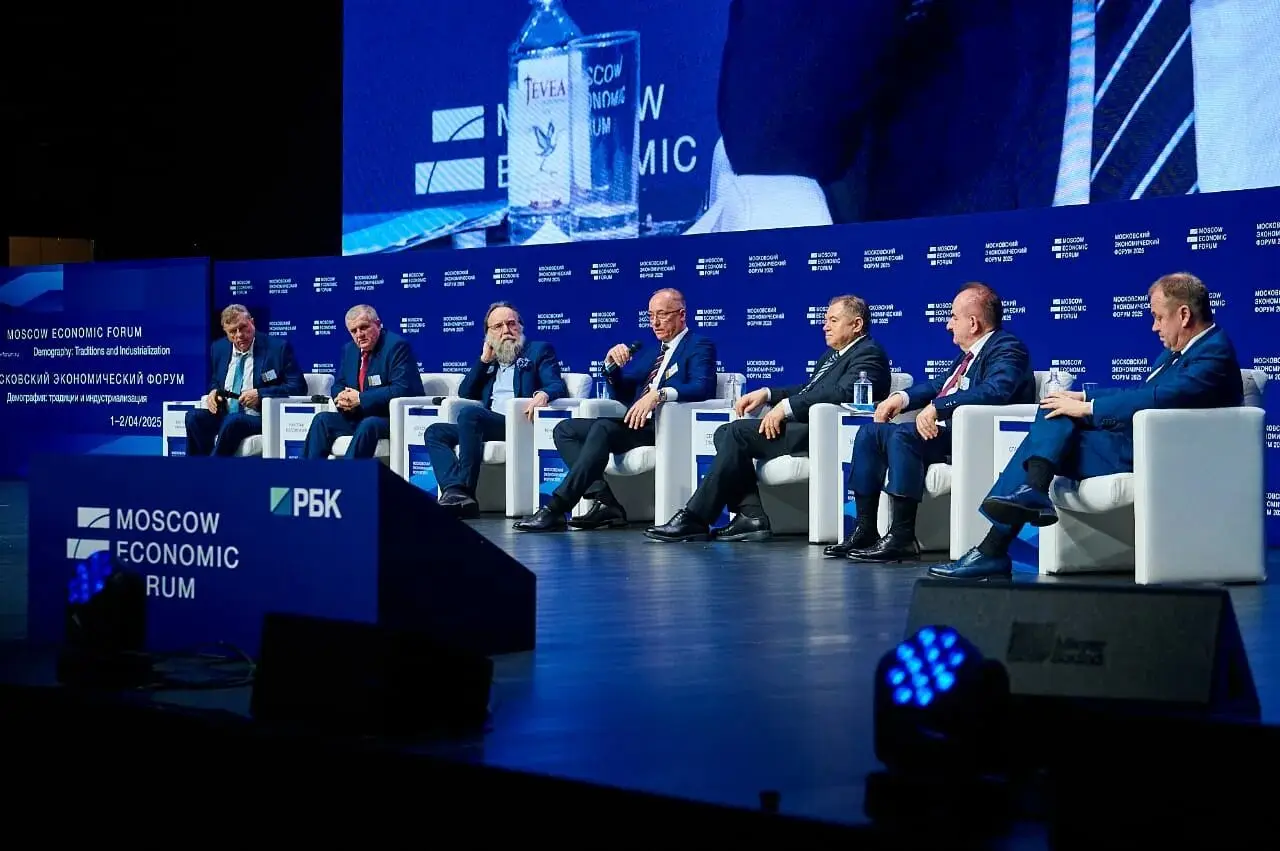
The plenary session of the Moscow Economic Forum — titled “Russia and the World After the Transformation: New Strategies” — brought together diplomats and analysts from Iran, India, Brazil, China, Germany, and Russia. The moderator, Ivan Timofeev, director-general of the Russian International Affairs Council, had framed the session around what new strategies were even possible in a world where the old rules kept failing to apply.
Iranian ambassador Kazem Jalali spoke as the representative of a country that had just spent forty days under American strikes — strikes Washington had hoped would produce a quick regime change. The ceasefire announced that day came on Iran’s terms. Jalali argued that the dollar had become a weapon before it was a currency — a lever of coercion dressed up as a medium of exchange. His prescription: a regional security architecture built by the region itself, without foreign military bases. A country with three millennia of continuous civilization, he suggested, would not be remade on Washington’s schedule.
Kanwal Sibal, India’s former foreign secretary, offered a message that sat uneasily with the room. Major powers, he said, must build self-sufficiency in critical industries and reduce dependence on unpredictable partners. But he pushed back against any optimism about multipolarity: a world of competing poles does not automatically produce a fairer one. Competitive multipolarity breeds a new chaos. What was needed instead was cooperative multipolarity — and reformed institutions, the UN and WTO among them — rather than simply replacing one hegemon with another.
Brazil’s ambassador, Sergio Rodrigues dos Santos, reached for Antonio Gramsci: the old world is dying, the new one cannot yet be born. Di Dongsheng of Renmin University added that American sanctions had paradoxically accelerated China’s indigenous innovation, and that the deglobalization now underway could stretch across four decades. Germany’s MEP Thomas Geisel argued that Europe urgently needs a pan-European security architecture — without one, the continent is condemned to remain a periphery.
Timofeev, closing the session, identified what he called the central paradox of the moment: most strategic forecasting still rests on economic rationality, yet reality keeps defying it — wars break out where they make no economic sense. The discussion laid bare the gap between the logic of global institutions and the logic of force, which has once again moved to the fore.

