


Sixty-five years ago, Yuri Gagarin strapped into a Vostok capsule and became the first human being to see Earth from space. This week, Russia marked that anniversary with something it has never attempted before: a full seven-day national celebration of spaceflight — forums, concerts, and some unusually candid debate about where the industry actually stands.
Space Week, held April 6–12, 2026, was established by presidential decree and organized jointly by the Russian government and Roscosmos. The timing was symbolic. The ambitions announced inside it were anything but ceremonial.
A Room Full of Partners — and a Big Promise
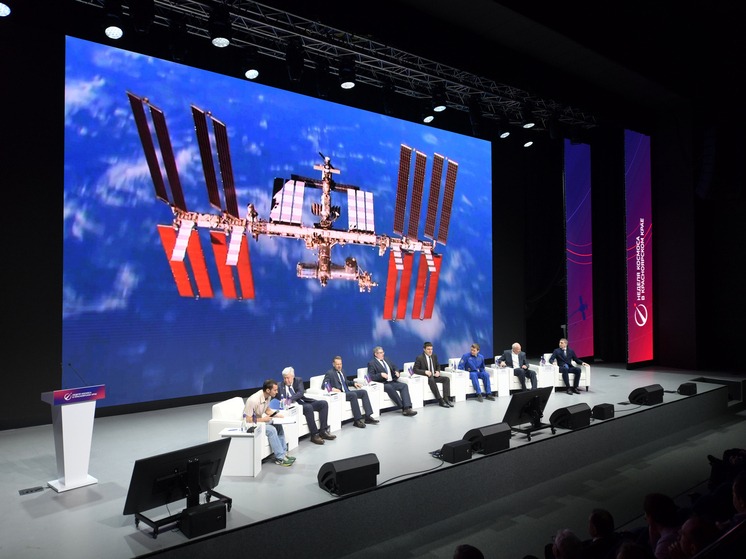
The centerpiece was the Russian Space Forum, held April 9 at Moscow’s National Centre “Russia.” Forty countries sent delegations; China, India, and the UAE held seats at the main table. First Deputy Prime Minister Denis Manturov opened the plenary with a headline: Russia is building a reusable rocket.
The specifications for Amur-LNG, a medium-class launch vehicle with a recoverable first stage, have already been approved. The target — launch and landing of an experimental prototype — is set for 2028. Roscosmos Deputy Director General Grigory Maximov went further, stating that within four years Russia intends to join the top three spacefaring nations in the world.
The Moon, a New Station, and $50 Billion
Roscosmos chief Dmitry Bakanov arrived at the forum with a calendar full of dates. Lunar scanning instruments are already in development and will be ready for a 2028 mission. The robotic Luna-30 lander — carrying a heavy-duty rover — is scheduled to launch in 2036. And this autumn, a Soyuz rocket will lift off from the Vostochny Cosmodrome carrying only commercial payloads — the first fully commercial Soyuz launch in the country’s history.
Binding all of it together is a national project worth approximately 4.5 trillion rubles (roughly $57 billion): satellite constellation expansion, development of reusable launch vehicles, and construction of a Russian Orbital Station to replace Russia’s role on the ISS. More than ten countries, Bakanov said, have already expressed interest in partnering on that future station.
The week that began with Gagarin’s legacy ended with a pointed question hanging in the air: can a space program that once defined an era reclaim its place at the frontier? The rockets and rubles suggest Russia intends to find out.

